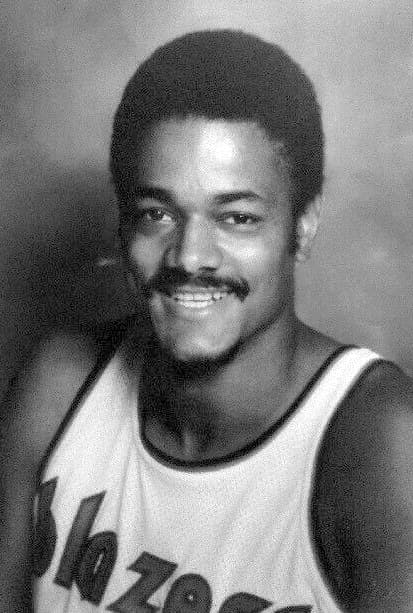
Championships are not won by one player. They are won by combinations — complementary skill sets assembled around a central star, each piece serving the system rather than drawing attention away from it. The 1977 Portland Trail Blazers understood this better than any team of their era, and at the center of that understanding was Maurice Lucas: the broad-shouldered, unsentimental power forward from Pittsburgh whose role was simple, essential, and sometimes brutal. His job was to make sure nobody messed with Bill Walton. He performed it magnificently.
The #20 hanging in the Moda Center rafters represents more than one player's career statistics. It represents the acknowledgment that championship teams require enforcers — players who are willing to do the physical, uncomfortable, sometimes unglamorous work that makes the beautiful basketball possible. Maurice Lucas was Portland's enforcer. The 1977 championship is, in no small part, his.
Pittsburgh to Portland: Building the Enforcer
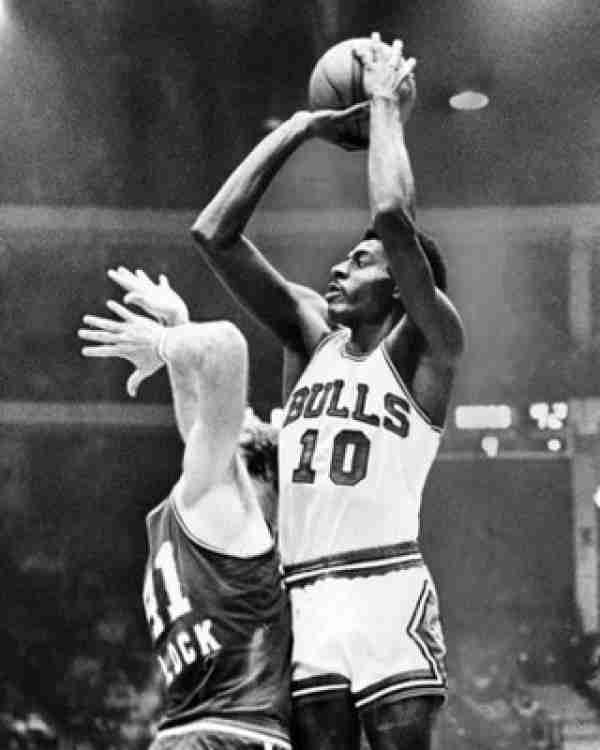
Maurice Lucas was born February 18, 1952, in Pittsburgh, Pennsylvania — a city that has produced more than its share of physically imposing, hard-nosed athletes across American sports history. He attended Marquette University, where he developed into one of the most formidable power forwards in college basketball. After being drafted by the Chicago Bulls in 1974, Lucas played in the ABA with the Utah Stars and Kentucky Colonels before arriving in Portland following the ABA-NBA merger in 1976.
His reputation preceded him. Lucas was known throughout the ABA as a player who defended his teammates — physically, aggressively, and without apology. When Jack Ramsay brought him to Portland as the complement to Bill Walton's finesse, he understood exactly what he was building. Walton needed someone beside him who could engage the physical battle that Walton's basketball intelligence and touch were not designed to fight. Lucas was that someone.
The 1977 Season: Chemistry That Defined Championship Basketball
The Walton-Lucas frontcourt was the most dominant two-man combination in the 1977 NBA season. While Walton orchestrated the offense, read defenses, and controlled the glass with positioning and timing, Lucas provided the physicality that kept opposing big men honest. He was not merely a defender — he averaged 20.2 points per game during the regular season, making him a legitimate scoring threat whose offensive production forced teams to choose between doubling Walton and allowing Lucas free access to the paint, or defending Lucas and letting Walton operate without resistance.
The combination was almost impossible to defend. Portland's front office had assembled the perfect partnership around Jack Ramsay's system — ball movement, fast breaks, relentless pressure — and Lucas was the human exclamation point at the end of every possession. His ability to clean up rebounds that Walton could not reach, finish through contact, and protect teammates with his physical presence made Portland a team that opponents approached with legitimate anxiety.
The 1977 Finals: Neutralizing the 76ers' Frontcourt
In the 1977 NBA Finals against the Philadelphia 76ers, Lucas averaged 20.3 points and 10.3 rebounds per game — numbers that made him an equal partner in Portland's championship, not a secondary character. His most important work, however, could not be captured in statistics. George McGinnis — the powerful ABA veteran who had destroyed opponents throughout the season — was supposed to be the physical force that neutralized Walton and gave Philadelphia its frontcourt advantage. Lucas had other ideas.
From Game 3 forward — after Jack Ramsay gave Lucas explicit permission to match Philadelphia's physical aggression — the McGinnis-Lucas battle tilted decisively in Portland's favor. Lucas outworked, outmuscled, and outcompeted a player who had been one of the most physically dominant forces in professional basketball. McGinnis, so effective in Games 1 and 2, was increasingly neutralized as the series progressed. Portland won four consecutive games. The frontcourt battle — Lucas versus McGinnis — was a decisive factor in every one of them.
A Legacy Cut Short and a Memory That Endures
Maurice Lucas played with Portland through the 1979-80 season before departing for New York, then Phoenix, and eventually returning to the Blazers briefly in 1987-88. He became a respected voice in basketball as a coach and mentor, working with Portland in various capacities in his later career. He was known for his intelligence about the game, his honesty with players, and the kind of institutional wisdom that comes from having been part of something great.
On October 31, 2010, Maurice Lucas passed away from bladder cancer at age 58. The basketball community mourned a player whose role on the 1977 championship team had never received the recognition it deserved — a man who had spent his career doing the hard work that makes beautiful basketball possible, and who had never complained about the relative anonymity that enforcers accept as the price of their importance.
Why the Trail Blazers Retired #20
Portland retired Maurice Lucas' #20 with the understanding that championships are not won by one extraordinary individual — they are won by extraordinary individuals supported by equally committed teammates. Lucas committed everything to Portland's 1977 championship. His 20 points and 10 rebounds per game in the Finals were the numbers. His willingness to be the enforcer, to accept the physical confrontations that Walton's game required someone else to handle, was the character.
The #20 in the rafters is Portland's acknowledgment that great teams honor everyone who contributed to greatness, not only the stars whose names appear first in the historical record. It is an acknowledgment that Maurice Lucas — the Pittsburgh enforcer who protected Bill Walton, outcompeted George McGinnis, and averaged 20 points in the NBA Finals — deserves to be remembered as a champion whose contribution was essential, irreplaceable, and worthy of permanent honor.
No Rip City fan who lived through 1977 has forgotten Maurice Lucas. The #20 in the rafters ensures that no Rip City fan ever will.
¿Te gusta este análisis?
Recibe más análisis como este en tu bandeja de entrada.