
Halaman ini mengandung tautan afiliasi. Kami mungkin mendapatkan komisi jika Anda membeli melalui tautan ini, tanpa biaya tambahan untuk Anda. As an Amazon Associate I earn from qualifying purchases.
Most basketball shoe guides rank shoes by brand hype or star endorsement. That approach fails the moment you step on the court. A point guard cutting through traffic at full speed needs fundamentally different traction geometry than a center absorbing contact in the post. Heavy cushion that feels comfortable in-store actually works against guards on the floor — the more material between your foot and the surface, the less feedback you get during crossovers and defensive rotations.
Related: Best Basketball Shoes for Guards 2026
This guide sorts shoes the way the court does: by position. Each section covers 3-4 picks ranked on court performance, not aggregate ratings. We break down traction, court feel, ankle support, and cushion responsiveness across budget ($70-$100), mid-range ($100-$150), and premium ($150-$200+) tiers — and we flag when a mid-range shoe outperforms a premium one, because price does not always equal performance on hardwood.
How to Use This Guide
Find your position. Each section covers 3–4 shoes ranked by court performance. Every pick includes what it does well, where it falls short, and who it's actually built for.
Price tiers: Budget ($70–$100), Mid-range ($100–$150), Premium ($150–$200+). We note when a mid-range shoe outperforms a premium one — because price does not always equal performance on court.
Best Shoes for Guards
Guards need three things: responsive traction for quick cuts, low-to-ground court feel for ball handling, and lightweight construction that doesn't sap energy over 30+ minutes.
Heavy cushion systems that feel comfortable in-store actually work against guards on court. The more material between your foot and the floor, the less feedback you get during crossovers and defensive rotations.
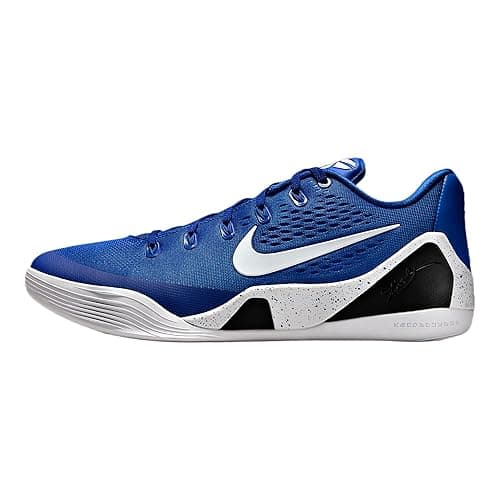
1. Nike Kobe 9 Elite
Best for: Lead ball handlers, perimeter defenders, players who change direction 40+ times per game
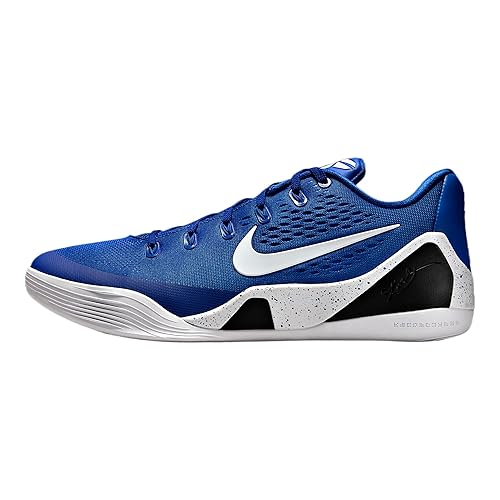
The Kobe line continues as the default guard shoe: low-profile, herringbone traction that grips on clean and slightly dusty courts, Zoom Air cushioning that protects without elevating your foot too far from the surface.
Court feel is exceptional. During defensive slides, you can feel the floor surface through the outsole — which matters when you're guarding a quick guard and need to react to the first step, not the second.
Where it falls short: Durability on outdoor courts. The outsole wears faster on asphalt.
Price: ~$180 | Nike Kobe 9 Elite — Check price on Amazon
2. Under Armour Curry Flow 11
Best for: Shooters who move without the ball, off-screen specialists, players who prioritize lateral stability
The Curry line evolved from a point guard shoe into something more specific: a shoe for players who run through screens, plant hard on catch-and-shoot actions, and need lateral containment. The UA Flow cushion provides excellent court contact.
The midfoot shank provides torsional rigidity during hard plants — the stop-and-pop motion shooting guards repeat dozens of times per game.
Where it falls short: Traction degrades on dusty courts faster than rubber outsoles. Narrow fit — size up half if between sizes.

Price: ~$160 | Under Armour Curry Flow 11 — Check price on Amazon
3. Jordan Tatum 3
Best for: Two-way guards, combo guards, budget-conscious players wanting premium performance

At $120, it competes with shoes costing $60 more. The Air Strobel cushion gives responsive ride without bulk. It's the Swiss Army knife of guard shoes: not the absolute best at any one thing, but genuinely good at everything a guard needs.
Where it falls short: Court feel not as precise as the Kobe line. Slightly thicker midsole reduces floor feedback.

Price: ~$120 | Jordan Tatum 3 — Check price on Amazon
Best Shoes for Forwards
Forwards face a unique challenge: they need to cut like guards on offense and rebound like centers on defense, often within the same possession. Most guides recommend either a guard shoe (too light) or a center shoe (too heavy). Forwards need the hybrid.
1. Nike LeBron 22
Best for: Physical forwards who drive to the rim, players over 200 lbs needing cushion that doesn't bottom out
Zoom Air plus full-length Air Max creates cushion that handles repeated high-impact landings without compressing flat. For physical, drive-heavy forwards, the LeBron 22 provides impact protection lighter shoes cannot.
Where it falls short: Weight — 15.5 oz. If your game is more perimeter-oriented, it's more shoe than you need.
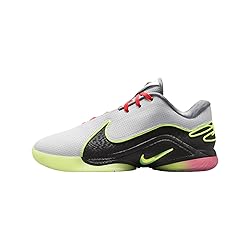
Price: ~$200 | Nike LeBron 22 — Check price on Amazon
2. New Balance TWO WXY v5
Best for: Versatile forwards, two-way players who value court feel at the forward position
New Balance has quietly become one of the best basketball shoe brands. FuelCell foam provides bounce without excessive height. The wide base gives landing stability, and it weighs 2 oz less than the LeBron 22 with comparable support.
Where it falls short: Brand availability — finding the right size in-store can be difficult.

Price: ~$140 | New Balance TWO WXY v5 — Check price on Amazon
3. Adidas Harden Vol. 8
Best for: Forwards who operate from the mid-range, step-back specialists
Engineered for deceleration — step-backs, hesitations, sudden stops. Boost cushioning concentrated in the forefoot where deceleration forces peak. For face-up, mid-range forwards, exceptional forefoot response.
Where it falls short: Minimal ankle support. If you need it due to injury history, look elsewhere or wear a brace.

Price: ~$160 | Adidas Harden Vol. 8 — Check price on Amazon
Best Shoes for Centers and Big Men
Centers need impact absorption above everything. Every possession involves contact. A cushion system that feels plush at 180 lbs may bottom out at 230+ lbs during a hard landing. Test under game conditions, not store conditions.
1. Nike Air Max DN Basketball
Best for: Traditional centers, rim protectors, post players over 230 lbs
Deepest cushion stack in Nike's basketball lineup. Full-length Max Air maintains cushion properties game after game. Wide outsole for stability, traction pattern handles pivot-heavy post footwork: drop steps, up-and-unders, reverse pivots.
Where it falls short: Court feel is almost nonexistent. For centers who step out to three, the disconnected feel can affect shooting touch.

Price: ~$180 | Nike Air Max Dn8 — Check price on Amazon
2. Adidas AE 2
Best for: Modern centers who space the floor, pick-and-pop bigs, mobile centers who switch on defense
Marketed as a guard shoe, but the wide base and thick Lightstrike midsole make it surprisingly effective for mobile big men. For a modern center who operates from the perimeter as much as the post — think KAT or Jokic — this fits better than a traditional big-man shoe.

Where it falls short: Not built for 250+ lb traditional post players. Cushion compresses under heavy, repeated post-up impact.

Price: ~$120 | Adidas AE 2 — Check price on Amazon
Best Budget Pick (Any Position)
Puma MB.04
Best for: Players on a budget who refuse to compromise on court performance
At $110, the best value shoe in basketball for 2026. Nitro foam cushion is responsive and light, traction is excellent on clean courts, fit works across foot shapes. It doesn't specialize — which is why it works for every position at this price.
Where it falls short: Traction requires frequent wiping on dusty courts.

Price: ~$110 | Puma MB.04 — Check price on Amazon
What Specs Actually Matter
- Traction pattern: Herringbone remains the gold standard. Translucent rubber grips less than solid rubber.
- Cushion vs. your weight: Foam (React, FuelCell, Nitro) under 210 lbs. Air-based (Zoom, Max) for heavier players.
- Fit and lockdown: A shoe that slides during cuts is dangerous regardless of technology.
What Is Mostly Marketing
- Carbon fiber plates: Effective for running, minimal benefit for multi-directional basketball.
- 'Adaptive' knit: All knit stretches. Judge containment, not the label.
- Limited colorway 'technology': Same shoe, different color, same materials.
How to Test Shoes
- Wear them to one pickup session. One hour of play tells more than 30 minutes in-store.
- Test lateral movement first. Defensive slides reveal traction quality fastest.
- Jump and land. Does cushion absorb impact or transfer it to your knees?
- Check heel lockdown. Sprint and stop hard. Heel lift = wrong fit.
Position Quick-Reference
The Bottom Line
The best basketball shoe is the one that matches how you play — not the one your favorite player wears on TV. A guard in LeBrons is carrying unnecessary weight. A center in Kobes is sacrificing cushion their knees need. Start with your position. Filter by weight and budget. Test on an actual court.
Frequently Asked Questions
How much should I spend on basketball shoes in 2026?
Expect three tiers: budget ($70–$100), mid-range ($100–$150), and premium ($150–$200+). Price doesn't always equal on-court performance — mid-range shoes like the $120 Jordan Tatum 3 and the $110 Puma MB.04 compete with shoes $50–$60 more expensive. Set your budget by how often you play, then buy on fit, traction, and weight rather than the price tag.
What cushioning is right for my weight?
Under about 210 pounds, foam-based cushioning (Nike React, New Balance FuelCell, Puma Nitro) gives the best blend of court feel and responsiveness. Heavier players who absorb big landing forces are better served by air-based systems (Nike Zoom or Max Air), which resist bottoming out on hard landings. Match the cushion to your body weight and impact, not to what feels plush in the store.
Should I pick basketball shoes by position?
Yes. Guards want lightweight builds with responsive traction and low-to-ground court feel; forwards need a hybrid that cuts like a guard shoe but cushions like a bigger shoe; centers need maximum impact absorption and a wide, stable base for pivots. A guard in a heavy center shoe carries dead weight; a center in a low-profile guard shoe loses the cushion their knees need.
Are expensive basketball shoes worth it?
Not automatically. The best value pick of 2026 is the $110 Puma MB.04, and several mid-priced shoes outperform pricier flagships for specific positions. Spend up only when a premium shoe solves a real need you have — extra impact protection for a heavy forward, for example — not for the logo.
How long do basketball shoes last?
If you play three to four times a week indoors, plan to replace a pair every four to six months. Traction response fades before the upper visibly wears out, and a slipping outsole is both a performance and an injury risk. Keeping a separate outdoor pair extends the life of your indoor shoes considerably.
Can I wear indoor basketball shoes outdoors?
You shouldn't make a habit of it. Indoor outsole compounds are tuned soft for grip on polished hardwood and wear smooth quickly on concrete and asphalt. For outdoor courts, choose a shoe with a durable rubber outsole built for rough surfaces.
Related guides
Menikmati analisis ini?
Dapatkan lebih banyak breakdown seperti ini langsung ke kotak masuk Anda.