Halaman ini mengandung tautan afiliasi. Kami mungkin mendapatkan komisi jika Anda membeli melalui tautan ini, tanpa biaya tambahan untuk Anda. As an Amazon Associate I earn from qualifying purchases.
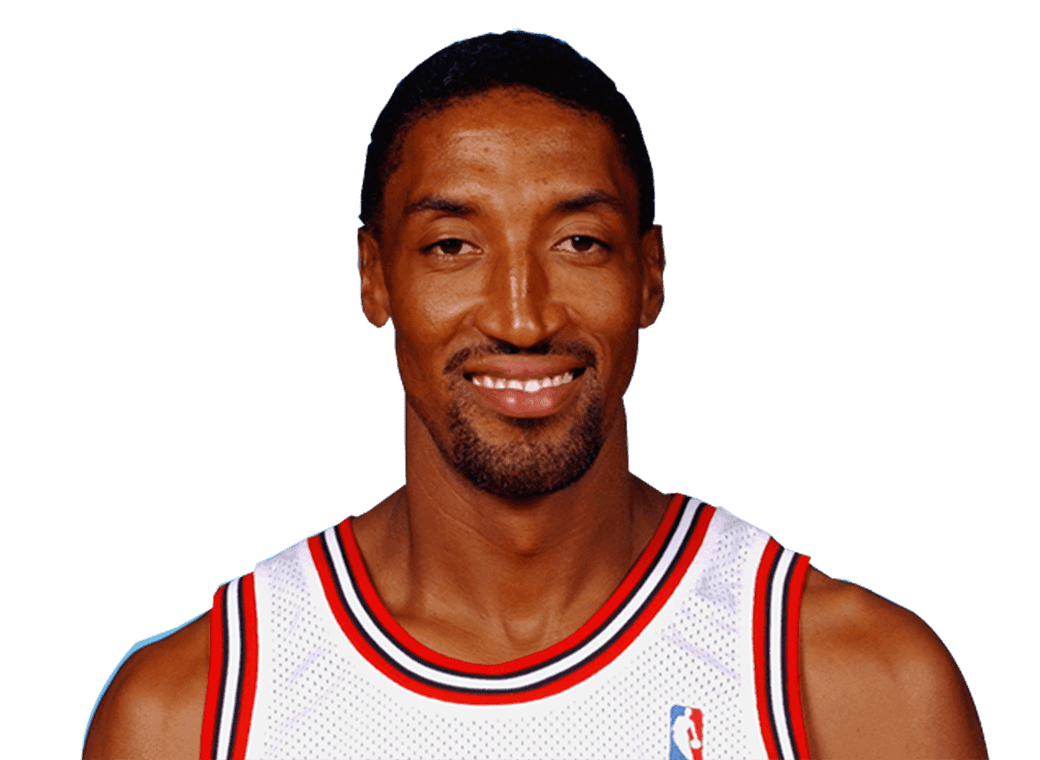
The Chicago Bulls retired Scottie Pippen's #33 in 2005, settling a question some had asked aloud: did a player who later suited up for other teams deserve the honor? The discussions missed the point. The Seattle SuperSonics drafted Pippen fifth overall in 1987, and Chicago acquired his rights that same night by sending Olden Polynice to Seattle — a swap that built a dynasty. Pippen won six NBA championships with the Bulls, made seven All-Star teams, earned eight All-Defensive First Team selections, and was named 1994 All-Star Game MVP. In Jordan's first retirement year he averaged 22.0 points, 8.7 rebounds, and 5.6 assists and led Chicago to 55 wins. He could guard every position, ran the offense when Jordan rested, and anchored the 72-10 team's switching defense. #33 is in the rafters because Pippen made the dynasty possible — and inhabited a supporting role without ever shrinking inside it.
The Draft Day Swap and the Early Years
The Seattle SuperSonics drafted Scottie Pippen fifth overall in 1987. On the same draft night, the Bulls — who had drafted Olden Polynice eighth — traded Polynice to Seattle for the rights to Pippen. It was the kind of deal that looks obvious in retrospect and looked like a minor move at the time.

Pippen's first two seasons were development years. The raw materials were extraordinary: 6'8" with a 7'3" wingspan, basketball IQ that allowed him to process multiple reads simultaneously, and a defensive instinct that coaches dream about. But he was inconsistent, young, and still figuring out what his game was in the NBA.
Phil Jackson's arrival changed the equation. The triangle offense, which Jordan had already internalized, required Pippen to understand and execute it at a high level. He did — better than anyone not named Jordan in the entire system's history. Jackson later said that Pippen was the only player he ever coached who understood the triangle as completely as he did.

The Prototype for Modern Basketball
Before Scottie Pippen, the "point-forward" concept was theoretical. After him, it became the most coveted position in the sport.
Pippen could guard every position on the floor. He guarded Magic Johnson in the 1991 Finals. He guarded Clyde Drexler in the 1992 Finals. He guarded Charles Barkley in 1993. He made defensive assignments that coaches considered impossible — not just containing elite players, but neutralizing them — and he did it while running Chicago's offense when Jordan rested, while setting the defensive tone for a team of grown men.

"Scottie could guard Magic Johnson, Larry Bird, and Patrick Ewing in the same game. Not just guard them — shut them down. I have never coached anyone with that defensive range. I've never heard of anyone with that defensive range." — Phil Jackson
In the 1993-94 season — Jordan's first retirement year — Pippen averaged 22.0 points, 8.7 rebounds, and 5.6 assists and led the Bulls to 55 wins. Fifty-five wins without the greatest player alive. Then in the playoffs, against the New York Knicks, he refused to return to the floor in the final second of Game 3 because Phil Jackson had drawn up the final play for Toni Kukoc instead of him.

That moment — Pippen's only truly selfish act as a Bull — became, paradoxically, the moment that most humanized him. He was angry because he wanted the ball. He wanted the ball because he believed he was his team's best player. He was right. A man who sits down at the end of a playoff game because he knows his worth is not someone who lacks confidence. He's someone who has learned exactly how good he is.

The Second Three-Peat and the Complete Player
Jordan's return in March 1995 and the rebuilding of the dynasty for 1995-96 required a Pippen who was better than he had been in 1993. He was. The triangle offense now ran through him as naturally as breathing. The 72-10 season was as much about Pippen's defensive versatility as Jordan's scoring — Chicago could switch everything on defense because Pippen could guard anyone, which meant Jordan could gamble for steals without catastrophic consequences.
The 1997 Flu Game is remembered as Jordan's greatest individual performance. What's less remembered: Pippen played 44 minutes in that game and scored 23 points while managing the offense in every quarter where Jordan was doubled. The Flu Game happens because Pippen is good enough to make Jordan's suffering survivable.

The 1998 Finals — the Last Dance — sealed everything. Pippen's defense on Karl Malone was the decisive factor in Utah's collapse. The steal in Game 6, setting up Jordan's championship-winning shot, is on every highlight reel. But Pippen is the one who stripped the ball. Pippen is the one who understood, before anyone else in the building, that the moment had arrived.
Seven Seasons, One Legacy
- 6 NBA championships (1991, 1992, 1993, 1996, 1997, 1998)
- 7x NBA All-Star
- 8x All-Defensive First Team
- 10x All-NBA Team selections
- Averaged 22.0 PPG in Jordan's absence (1993-94)
- 1994 All-Star Game MVP
- Member of the 1992 Dream Team (one of only 12 players selected)
- Naismith Memorial Basketball Hall of Fame (2010)
Why #33 Had to Be Retired
The Chicago Bulls retired Scottie Pippen's #33 in 2005. The decision came after public discussions about whether he deserved the honor given that he had played for other teams after leaving Chicago. The discussions missed the point entirely.
Pippen didn't just play alongside Jordan. He made Jordan possible as a dynasty builder. Jordan with a lesser partner wins championships — the talent gap between Jordan and everyone else was too large for even great defense to prevent. But Jordan with Pippen won six. The second three-peat, in particular, required a Pippen who could guard anyone, lead the offense, and trust his role — and then execute his role with a perfection that made the entire machine work.
The Bulls dynasty is the greatest team achievement in basketball history. Two players made it happen. Both numbers are in the rafters. Both belong there completely.

#33 represents the best kind of greatness: the kind that makes the player next to it greater, and that knows precisely how to inhabit a supporting role without shrinking into it. Scottie Pippen never shrank. He expanded — until the role he was in fit his size.
Menikmati analisis ini?
Dapatkan lebih banyak breakdown seperti ini langsung ke kotak masuk Anda.