Halaman ini mengandung tautan afiliasi. Kami mungkin mendapatkan komisi jika Anda membeli melalui tautan ini, tanpa biaya tambahan untuk Anda. As an Amazon Associate I earn from qualifying purchases.
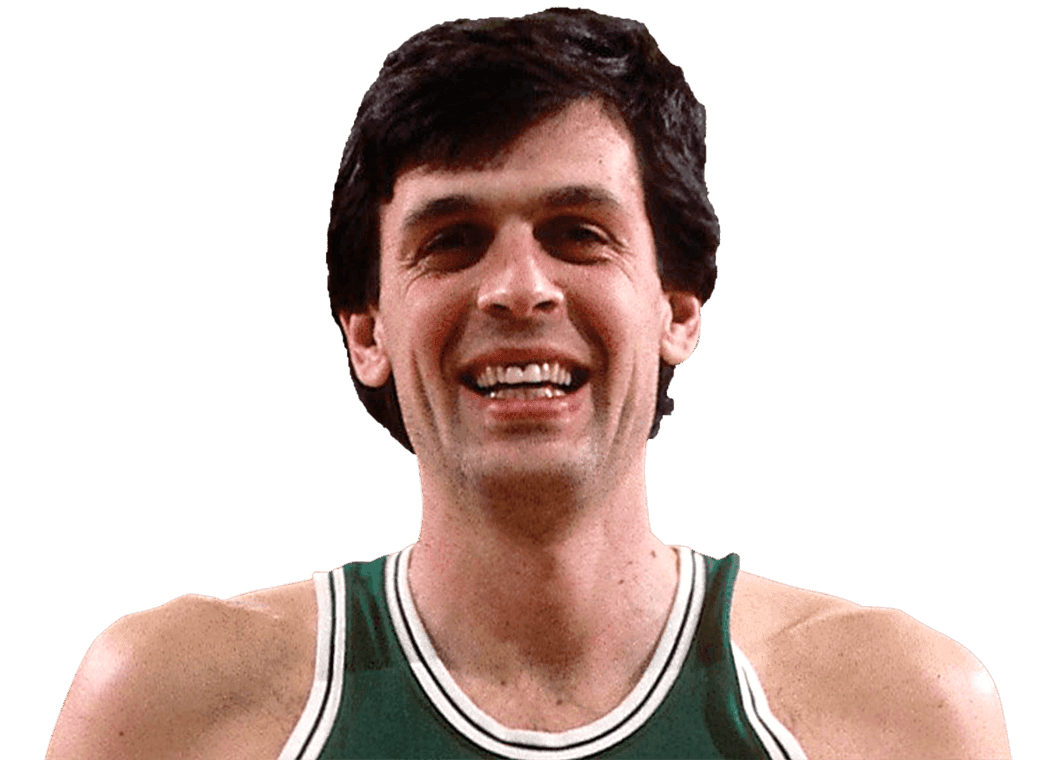
The Boston Celtics retired Kevin McHale's #32 in 1993. The number represents three championships, six All-Star selections, two Sixth Man of the Year awards, and the most technically accomplished post game in NBA history. McHale created an entirely new language for low-post scoring — the jump hook, the step-through, the up-and-under, the reverse pivot, the baseline spin — a catalog so complete that mastering the counter to one move only exposed defenders to three others. He scored over 17,000 points almost entirely within twelve feet of the basket, his legendary wingspan and deliberate footwork making him unguardable. He won titles in 1981 before he became a starter, then in 1984 and 1986 as one of the three best players on the Bird–McHale–Parish frontcourt widely considered the greatest in basketball history. In the 1987 playoffs he played on a fractured foot, a medically reckless sacrifice that shortened his career. His #32 honors a philosophy of craftsmanship that raw athleticism alone cannot match.

The Move Catalog
Ask any basketball coach to describe Kevin McHale's post game and they will eventually fall silent, because the full description requires a whiteboard and more time than a conversation allows. The jump hook. The step-through. The up-and-under. The reverse pivot. The baseline spin. He had a collection of moves in the low post that no defender could fully prepare for, because mastering the counter to one move only exposed you to three others. He scored over 17,000 points in his career almost entirely within twelve feet of the basket, in an era of increasingly athletic defenders, and made it look like a mathematics problem he had already solved.

His arms — the legendary wingspan that allowed him to shoot over virtually any defender — were the starting point. But it was the footwork that made McHale unguardable. He moved in the post with a deliberateness that looked almost slow, until the defender realized the footwork had already created a shot that was going in.

Three Championships and a Sacrifice
McHale won three championships with the Celtics: 1981 before he became a starter, then 1984 and 1986 as one of the three best players on one of the best teams in NBA history. The Larry Bird–Kevin McHale–Robert Parish frontcourt is widely considered the greatest in basketball history — three Hall of Famers operating as a unit so complete that opposing coaches effectively had no answer for it.

In the 1987 playoffs, McHale played on a fractured foot, a decision he later acknowledged was medically reckless and personally necessary. He played through it. The Celtics reached the Finals. The foot never fully healed, and his career was shortened as a result. The sacrifice was characteristic: McHale never played basketball for individual recognition. He played to win.
The Standard
Forty years after his final game in Boston, Kevin McHale remains the measuring stick for post play. When analysts evaluate modern big men, the standard is always McHale. His #32 honors not just a player but a philosophy of craftsmanship — that basketball, played with intelligence and an obsessive commitment to technique, produces results that raw athleticism alone cannot match.


Menikmati analisis ini?
Dapatkan lebih banyak breakdown seperti ini langsung ke kotak masuk Anda.