Halaman ini mengandung tautan afiliasi. Kami mungkin mendapatkan komisi jika Anda membeli melalui tautan ini, tanpa biaya tambahan untuk Anda. As an Amazon Associate I earn from qualifying purchases.
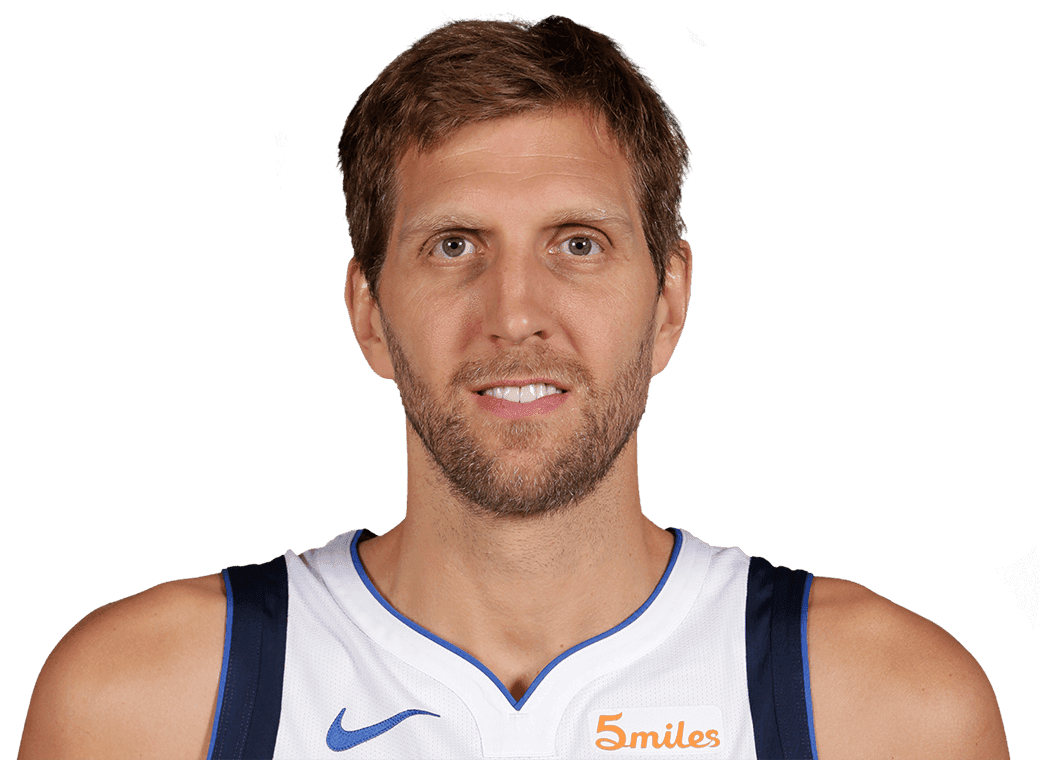
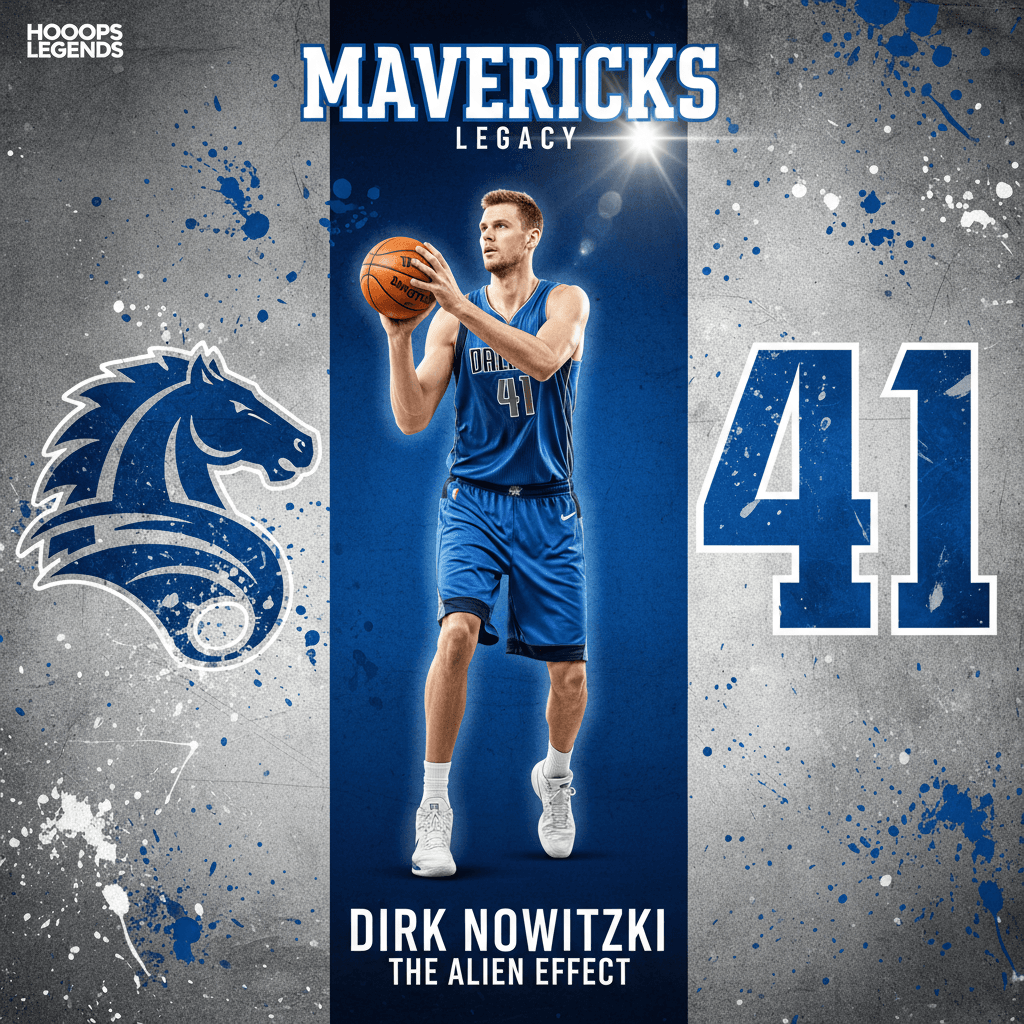
June 12, 2011. The American Airlines Arena in Miami fell quiet in the wrong way for the home crowd, and Dirk Nowitzki walked off the floor before the final buzzer of Game 6. He was a champion now, and he could not stay. He disappeared down the tunnel toward the locker room with the game still being played out behind him, sat alone, and wept into a towel where no camera could find him. Five years earlier, in nearly the same building, he had blown a 2-0 lead in the Finals and walked off as the symbol of a team that could not finish. Five years of being told he was soft, that a seven-foot jump-shooter could not carry a champion, that the loyalty he had shown Dallas was sentiment a smarter player would have abandoned. The German had answered all of it in six games against the most assembled superteam basketball had ever built. The Dallas Mavericks would one day raise his #41 to the rafters. This is the story of why.
He needed a moment alone before he could share the trophy. That was the whole man in a single gesture — the private grief of a public redemption, earned over thirteen seasons and very nearly lost forever.
The Bundesliga Bet
In the spring of 1998, Don Nelson sent his son Donnie and a former pro named Holger Geschwindner's protégé across the Atlantic to look at a teenager nobody in the NBA had seen play in person. The kid was from Würzburg, a town in Bavaria better known for wine than basketball, and he had been training since adolescence not with a club system but with Geschwindner, an eccentric former German national-team player who taught him fencing footwork, played him saxophone, and built a shooting motion designed to be physically impossible to block. What the Mavericks' scouts saw was a 7-foot forward who could shoot off the dribble, handle the ball like a guard, and run the floor with a fluidity that had no precedent at his height. Nelson came away convinced he had seen the future. Most of the league had not even seen the present.

The Mavericks did not have the ninth pick in the 1998 NBA Draft. The Milwaukee Bucks did. On draft night, Milwaukee selected Dirk Nowitzki ninth overall — the highest a German player had ever been chosen — and immediately traded him to Dallas as part of a prearranged deal, along with the rights to Pat Garrity, for Robert Traylor. It was one of the most lopsided draft-night trades in league history, though nobody could have known it then. Nowitzki arrived in Dallas speaking limited English, completely unknown to American audiences, and got run off the floor as a rookie. He averaged eight points. Fans booed. Columnists wondered aloud whether Nelson had embarrassed the franchise on a European vanity project.
The Slow Build of a Foreign Star
Nowitzki almost quit. He has said since that the rookie year was so disorienting — the language, the physicality, the booing — that he considered going home to Germany. Geschwindner flew over, and the two of them did what they had always done: they went into an empty gym and they shot. The one-legged fadeaway that would later become the most unguardable shot in basketball was not a trick. It was the logical end of a decade of practice designed around a single principle — get to a spot where a defender cannot reach the ball without fouling, and release it the same way every single time.

By his fourth season he was an All-Star. By his fifth he was in the MVP conversation, a 7-foot forward leading the Mavericks to 60-win seasons alongside Steve Nash and Michael Finley in Nelson's run-and-gun system. The Dallas teams of the early 2000s were thrilling and incomplete — high-scoring, defensively suspect, perennial second-round casualties. When Nash left for Phoenix in 2004 and won back-to-back MVPs, the criticism of Nowitzki sharpened: maybe the German had been the passenger all along. He answered in 2007 by winning the regular-season MVP himself, the first European-born player ever to do it, after leading Dallas to 67 wins.
Then came the worst week of his professional life.
The Collapse: 2006 and 2007
The 2006 NBA Finals should have been the coronation. Dallas won the first two games against a Miami Heat team led by a young Dwyane Wade and an aging Shaquille O'Neal. Nowitzki was the best player in the series through two games, and the Mavericks were one of the great upsets away from a title. Then it unraveled. Wade got to the free-throw line at a volume that infuriated Dallas for a decade, the Heat won four straight, and the Mavericks lost a series they had led 2-0. Nowitzki missed a free throw late in Game 3 that still appears in his nightmares by his own admission. He left the arena that June carrying a reputation he would spend five years trying to bury.

It got worse before it got better. The following spring, the 67-win Mavericks — the best regular-season team in basketball, with the reigning MVP — became the first No. 1 seed in NBA history to lose to a No. 8 seed in a seven-game series, falling to Baron Davis and the Golden State Warriors. Nowitzki, fresh off being handed the MVP trophy, was hounded by Golden State's smaller, switching defense and shot poorly in the decisive games. The narrative hardened into something close to permanent: brilliant in November, brittle in June. A regular-season hero who shrank when it mattered. For a man who had crossed an ocean and given his entire career to one city, it was the cruelest possible verdict.
The Redemption: The 2011 Run
The 2011 NBA Playoffs are the defining chapter of Nowitzki's career and one of the most complete individual postseason performances the sport has produced. He was 32 now, no longer the wunderkind, surrounded by a roster of veterans and reclamation projects — Jason Kidd in his late thirties, Shawn Marion, Tyson Chandler anchoring the defense, Jason Terry off the bench, J.J. Barea giving the team a jolt of chaos. Nobody picked them. They were a team built on scar tissue.

Nowitzki averaged 27.7 points per game across the entire run and shot roughly 49 percent from the floor while drawing the opponent's best defender every night. The signature came early: in Game 1 against the Portland Trail Blazers and again in the series against Oklahoma City, the one-legged fadeaway became a metronome that no scheme could stop. Against the Thunder in the Western Conference Finals, he scored 48 points in Game 1 and missed only one shot all night — a 12-of-15 line from the field and a perfect 24-of-24 from the free-throw line, one of the most efficient playoff games ever played. Dallas closed out the young, athletic, supposedly superior Thunder in five.
And then came Miami again. The same building. A different, more daunting opponent. LeBron James, Dwyane Wade, and Chris Bosh had assembled in the summer of 2010 in a televised spectacle, three stars promising not one, not two, not three championships. They had built a superteam specifically to win, and they stood between Dirk Nowitzki and the only thing his career was missing.
Afterward, Nowitzki spoke about a team that had simply refused to quit — years of being told he could not finish, answered at last by a roster of veterans who kept fighting until the trophy was theirs. Then he slipped back to the locker room to gather himself before he could face anyone.

The Heat took Game 1. In Game 2, Dallas trailed by 15 in the fourth quarter and stormed back, Nowitzki driving left and finishing a layup with his off hand over the Heat's defense in the final seconds to steal the game. He played Game 4 with a fever above 101 degrees — the "Flu Game" of his own career — and scored 21 points, including the go-ahead basket down the stretch. He was running a temperature, the building was hostile, and he refused to come out. By the time Game 6 arrived, the series had turned completely. Dallas closed it out on Miami's floor. Nowitzki shot poorly that final night, missing badly through three quarters, and still the Mavericks won because the team he had bound together for years did not need him to be perfect anymore. He was named Finals MVP. He had averaged 26 points across the six games and beaten the most talented team in basketball with a roster of castoffs and elders.
The 2006 collapse and the 2011 redemption are inseparable. One does not mean anything without the other. The same arena that had broken him gave him the only ending that could have made him whole.

The Position He Rewrote
The long-term legacy of Dirk Nowitzki reaches well past his own trophy case. He is, more than any single player, the reason the modern NBA looks the way it does. Before him, the prototype power forward was a load who operated with his back to the basket — Charles Barkley, Karl Malone, Kevin Garnett. They were powerful and they were effective, and not one of them was expected to rise up and bury a 25-footer with the game on the line. Nowitzki made that the expectation rather than the exception.
He proved that a 7-foot forward could be the most dangerous man on the floor precisely because he was mobile, skilled with the ball, and capable of releasing a shot from a spot and an angle that defenders had no framework for contesting. The one-legged fadeaway over a contesting hand became the most reliably unstoppable shot of its era. Every spacing big who followed — Kevin Durant, LaMarcus Aldridge, Kristaps Porzingis, the modern stretch fours and shooting centers who now populate every roster — operates in a world Nowitzki proved was livable. Players a foot shorter study his footwork. The seven-footers who can shoot owe him the vocabulary.
The Number That Never Left
Nowitzki's home farewell came on April 7, 2019, at the American Airlines Center in Dallas. He scored 30 points against the Phoenix Suns, the building chanting his name on every touch, and gave a tearful speech to the only city he had ever played for. His actual final game followed two nights later, on the road in San Antonio. He was 40 years old. That season, Dwyane Wade — his old Finals tormentor — had swapped jerseys with him in a quiet act of respect between two men whose careers had been welded together by 2006 and 2011. Soon after, the Mavericks raised #41 to the rafters, and Nowitzki entered the Naismith Memorial Basketball Hall of Fame in 2023, a first-ballot induction that surprised no one.
The Numbers Behind the Number
- 1 NBA championship and 1 Finals MVP (2011) — the redemption that erased 2006
- 1 regular-season MVP (2007) — the first European-born player ever to win it
- 14× NBA All-Star, selected across three decades
- 21 seasons, all with the Dallas Mavericks — the longest run with a single franchise in NBA history
- Roughly 31,560 career points, sixth on the all-time list and the most by any international player
- 12× All-NBA selection across First, Second, and Third Teams
- Drafted 9th overall in 1998 by Milwaukee, traded to Dallas on draft night
- The one-legged fadeaway — a shot taught by Holger Geschwindner and copied by a generation
- 2023 Naismith Memorial Basketball Hall of Fame, first ballot
None of these figures holds what Nowitzki meant beyond the box score. He globalized the idea of what a basketball star could be, opening a door that Luka Dončić, Giannis Antetokounmpo, Nikola Jokić, and Joel Embiid walked through a generation later. In Würzburg there is a street named after him. German kids who had never watched the NBA learned the game because a forward from their own country had beaten the Americans at it on the biggest stage. He turned Dallas from a basketball afterthought into a franchise with a permanent identity, and he did it without ever wearing another team's jersey.
Why #41 Hangs Forever
The easy answer is that the Mavericks retired #41 because Dirk Nowitzki was the greatest player in franchise history — the championship, the MVP, the 14 All-Star selections, the sixth-most points anyone has ever scored. All of that is true and none of it is the real reason.

The real reason is that he chose Dallas, and he kept choosing it. He could have left in free agency in 2004 when Nash did. He could have joined a contender in 2011 with a ring already in hand and his legacy secure. He took pay cuts in his final years so the front office could chase help that mostly never came, and he stayed anyway, through the good rosters and the bad ones, because he believed loyalty was not a weakness to be coached out of a player but the most powerful statement an athlete can make. In an era engineered for player movement, a 7-foot German gave one American city his entire adult life.
The number hangs in the American Airlines Center because what it witnessed will not be repeated — not the one-franchise career, not the position it rewrote, not the redemption arc that ran straight through the same arena that had once broken the man. #41 hangs near the franchise's other honored names, alongside the spine of Mavericks history that runs through Rolando Blackman's #22, Derek Harper's #12, and Brad Davis's #15 — the players who built the foundation Nowitzki raised into a champion. They are the history. He is the reason the rest of the world knows the history exists. That is why #41 will hang in those rafters for as long as the building stands.
Menikmati analisis ini?
Dapatkan lebih banyak breakdown seperti ini langsung ke kotak masuk Anda.