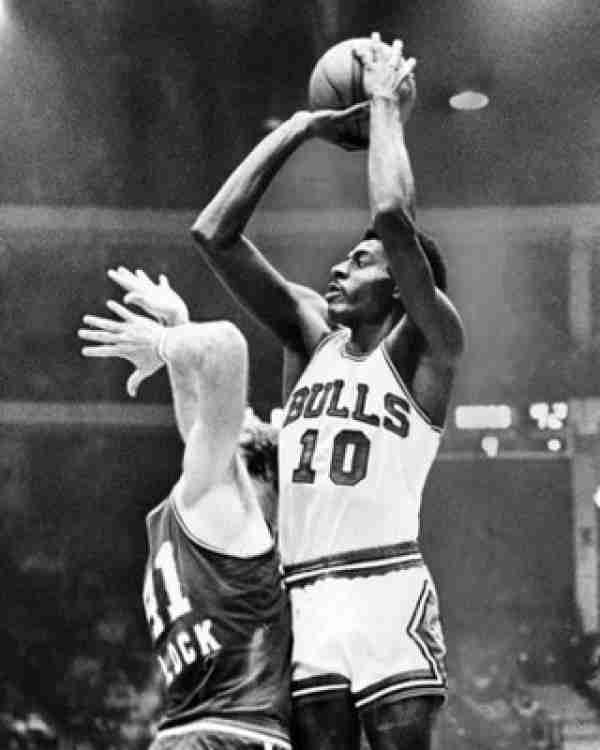
They called him The Horse because he never stopped. Game after game, season after season, across fifteen professional years and two leagues, Dan Issel showed up and produced — averaging more than 20 points per game with a consistency so reliable it almost became invisible. That invisibility is one of the most interesting things about great players who never had the flash of a transcendent individual moment: they become the wallpaper of winning basketball, essential and overlooked until you stop and count the points and realize the man scored 27,482 of them.
Issel's legacy in Denver is not just that of a great player. It is the legacy of a man who gave his entire professional life — as player, head coach, and general manager — to a single franchise. He is the most complete Nugget who ever lived. #44 belongs in the rafters not just because of the scoring. It belongs there because of everything that came after.
From Kentucky to Denver: The Making of The Horse
Dan Issel was born October 25, 1948, in Batavia, Illinois, and built his college legacy at the University of Kentucky under legendary coach Adolph Rupp. At Kentucky, Issel became one of the great scorers in Wildcats history and established the offensive baseline — post scoring, mid-range reliability, free throw excellence — that would define his professional career. He was drafted by the Detroit Pistons in the NBA Draft but chose to sign with the ABA's Kentucky Colonels, playing for his college state's hometown team before joining Denver.
Issel spent his first six ABA seasons with the Kentucky Colonels, becoming one of the ABA's premier players and establishing himself as a franchise-level center. When the Denver Nuggets acquired him via trade in 1975, they were getting a player at the absolute peak of his powers — a 27-year-old center who had already averaged over 25 points per game in the ABA and was still improving.
Eight Seasons Over 20 Points Per Game
In Denver, Issel averaged more than 20 points per game for eight consecutive seasons — a run of production that defines what it means to be a franchise scorer. He played in the high-tempo, run-and-gun offense that coach Doug Moe built around putting points on the board faster than opponents could respond, and Issel was the interior anchor who made it all work. While Alex English fired mid-range jumpers from the perimeter, Issel was operating in the post and on the baseline, creating efficient looks and converting them at a rate that made opponents chronically uncomfortable.
His 1977 NBA All-Star appearance was the formal recognition of what Denver fans already knew: Issel was one of the best big men in professional basketball. His ability to score in multiple ways — post scoring with either hand, a reliable mid-range jumper, and extraordinary free throw shooting for a center — made him a nightmare to defend individually and nearly impossible to plan against with team defense.
The 27,482 combined ABA and NBA career points place Issel among the highest-scoring players in professional basketball history. When adjusted to account for the ABA years — years played against professional competition in a legitimate league — Issel's scoring achievement is one of the most impressive of any player of his era. He simply scored, relentlessly, for fifteen years, and the points accumulated into a number that demands respect.
Beyond Playing: Coach and General Manager
What separates Issel's legacy from even other great Nuggets players is what came after the playing career. Issel returned to Denver as head coach of the Nuggets, then later as General Manager — serving the franchise in three major capacities across multiple decades. His understanding of the game, the organization, and the market was unique because he had been a part of it in so many different roles.
As a coach and executive, Issel carried the institutional knowledge that only comes from being deeply embedded in a franchise's culture. The decisions made during his front office tenure — the drafts, the trades, the development of players — contributed to the foundation that eventually led Denver to championship contention. His influence on the organization extended well beyond his playing days.
Why the Nuggets Retired #44
The Naismith Memorial Basketball Hall of Fame inducted Dan Issel in 1993, giving him the permanent recognition his production always warranted. The Denver Nuggets retired #44 for the same reason the Hall of Fame inducted him: the career numbers are exceptional, the franchise impact is undeniable, and the loyalty is the kind of thing that franchises should memorialize.
The Horse ran because that was his nature. He did not dazzle with 44-inch verticals or the elegance of a pure mid-range artist. He just ran, and scored, and won, and came back the next night and did it again. For fifteen professional years, then for years more as a coach and executive, Dan Issel gave everything he had to the game of basketball and to the Denver Nuggets specifically.
#44 hangs in the rafters because some legacies are built not in single moments of brilliance but in the accumulated weight of a career lived entirely at full effort. Twenty points a game, eight seasons in a row. 27,482 professional points. One franchise, three roles, three decades. That is The Horse. That is why #44 stays up there forever.
Menikmati analisis ini?
Dapatkan lebih banyak breakdown seperti ini langsung ke kotak masuk Anda.