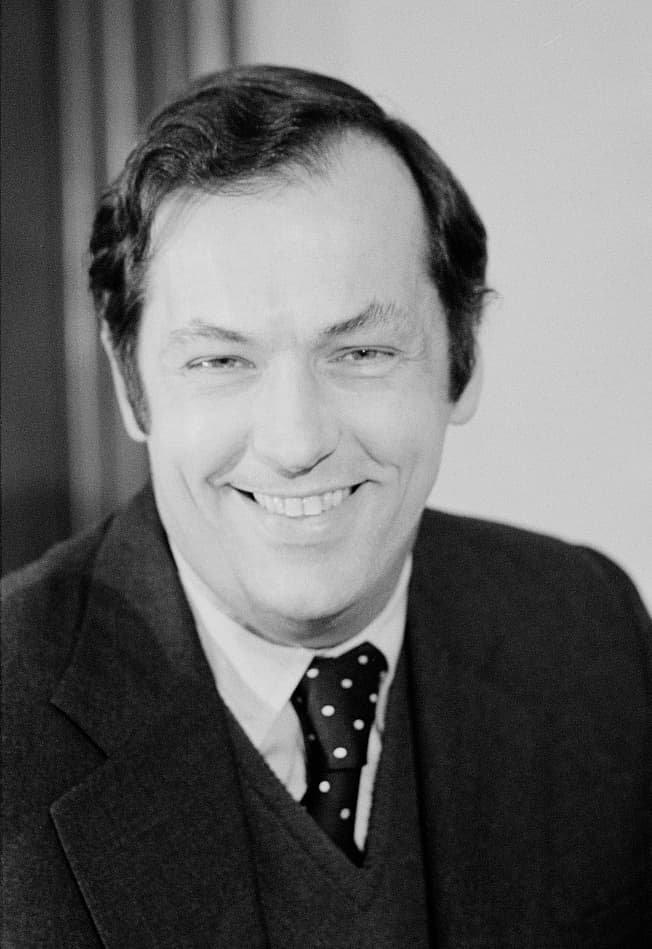
Bill Bradley was recruited by the New York Yankees baseball organization while still in high school. He turned them down. He won an Olympic gold medal with Team USA at the 1964 Tokyo Games. He earned a scholarship to Princeton University — not a basketball powerhouse — averaged 30.2 points per game as a junior and won a Rhodes Scholarship to Oxford University before ever playing an NBA game. By the time he joined the Knicks in 1967, two years after being drafted, Bradley had already accomplished more than most careers contain.
His #24 was retired by the Knicks in 1984. It honors not just a basketball player but a kind of basketball intelligence that the NBA has rarely seen — a man who approached the game with the same analytical rigor he brought to everything else and became a two-time champion in the process.
The Princeton Education
William Warren Bradley was born July 28, 1943, in Crystal City, Missouri. At Princeton, playing in a system that demanded precise passing, disciplined cutting, and unselfish decision-making, Bradley averaged 30.2 points per game as a junior and 27.6 as a senior. He scored 58 points in the 1965 NCAA tournament consolation game — still a tournament record. He was a two-time All-American. The Knicks selected him in the first round of the 1965 Draft but agreed to wait two years while he completed his Rhodes scholarship at Oxford.
He joined New York in 1967 as a 24-year-old rookie who had not played competitive basketball in two years. It took time. His first season was unremarkable. By his third, he was a cornerstone of the team Red Holzman was assembling into a championship contender.
The Perfect Piece
Bradley was not the Knicks' most talented player. He was not their best defender or their most prolific scorer. What he provided was something rarer: the ability to execute Holzman's motion offense at the highest level of basketball intelligence. His cuts were always precisely timed. His screens were textbook. His shot selection was near-perfect. He understood spacing, rotations, and how to create advantages for teammates without ever needing the ball in his hands.
In both the 1970 and 1973 championships, Bradley's contribution showed up most clearly in the games themselves rather than the box scores. He won his only All-Star selection in 1973. He retired after that season's championship — going out as a two-time winner.
After Basketball
Bradley ran for the United States Senate from New Jersey in 1978 and won, serving three terms before deciding against a fourth. He ran for the Democratic presidential nomination in 2000, challenging Al Gore on a platform of campaign finance reform. He wrote several acclaimed books, including Life on the Run — his memoir of the championship Knicks years, widely regarded as one of the finest books about basketball ever written.
Why the Knicks Retired #24
Bill Bradley's #24 hangs in the Garden rafters as recognition of a singular kind of player. He brought a philosopher's discipline to the game and became a champion by executing a system with a precision that required uncommon intelligence to achieve. The Knicks of 1970 and 1973 were built on the idea that basketball intelligence could overcome individual talent differentials — Bradley was the living proof of that thesis. His number deserved retirement the moment the second championship banner was raised.
Ti piace questa analisi?
Ricevi altri approfondimenti come questo direttamente nella tua casella di posta.