Questa pagina contiene link affiliati. Potremmo guadagnare una commissione se acquisti tramite questi link, senza costi aggiuntivi per te. As an Amazon Associate I earn from qualifying purchases.
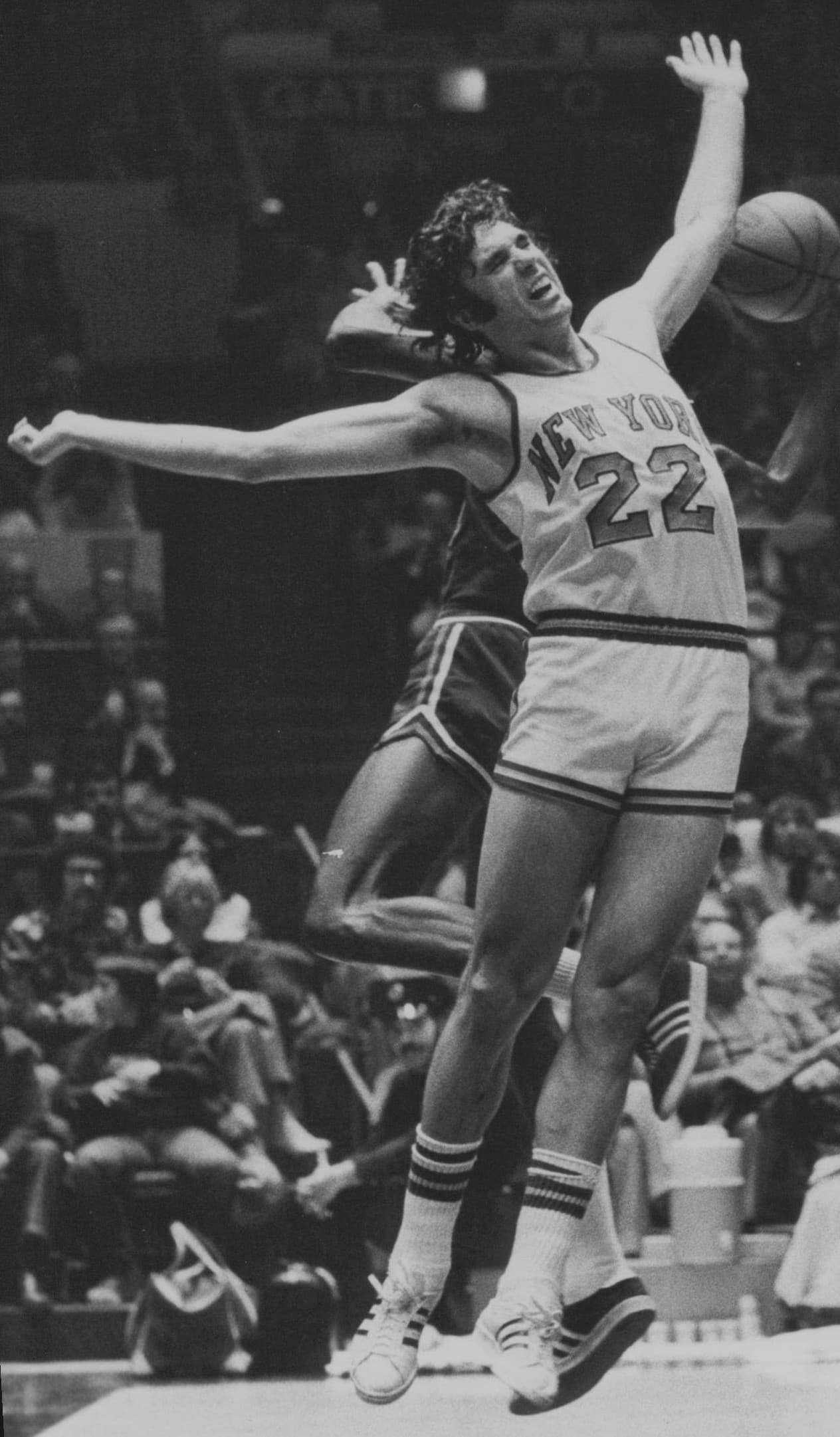
The December 1968 trade that brought Dave DeBusschere from the Detroit Pistons to the New York Knicks is routinely cited as one of the most consequential deals in NBA history. New York surrendered Walt Bellamy and Howard Komives and received the missing piece of a championship puzzle; within two seasons the Knicks were champions. David Albert DeBusschere, born October 16, 1940, in Detroit, was so gifted that he was drafted by the Pistons in 1962 and signed as a pitcher by the Chicago White Sox, posting a 2.90 ERA in 1963 before choosing basketball full-time in 1964. At 24 he became the youngest player-coach in NBA history. With the Knicks he made six consecutive NBA All-Defensive First Teams, guarding the opponent's best forward every night, and won championships in 1970 and 1973. He retired after 1972-73 and entered the Hall of Fame in 1983. His #22 was retired in 1982.

The Two-Sport Phenomenon
David Albert DeBusschere was born October 16, 1940, in Detroit, Michigan. His athletic gifts were so exceptional that he was drafted by both the Detroit Pistons in the first round of the 1962 NBA Draft and signed as a pitcher by the Chicago White Sox. For two seasons he existed in both worlds simultaneously — pitching in the major leagues and playing basketball for Detroit during the winter. His ERA was a respectable 2.90 in 1963. He chose basketball full-time in 1964, and the NBA was better for it.
At 24 years old, Detroit made DeBusschere the team's player-coach — the youngest in NBA history. He lasted two years in the role before accepting that his best contribution would be as a player. When the trade to New York materialized in December 1968, he was exactly what Red Holzman needed: a relentless, intelligent, physical forward who could guard the opposing team's best wing scorer every night.

The Defensive Cornerstone
DeBusschere made six consecutive NBA All-Defensive First Teams. Six. That means from the first season the honor was awarded (1969) through 1974, Dave DeBusschere was recognized every single year as the best defensive forward in the league. His assignment was always the same: take the opponent's most dangerous perimeter forward and eliminate him. He guarded Elgin Baylor in the 1970 Finals. He guarded Gail Goodrich and Jim McMillian in 1973. He rarely lost.

What made DeBusschere's defense special was its combination of physical strength, basketball IQ, and relentless effort. He was not the quickest forward of his era, but his positioning, his understanding of help rotations, and his willingness to put his body in harm's way made him consistently superior to more athletically gifted opponents. He was inducted into the Naismith Basketball Hall of Fame in 1983.
Two Championships, Then Goodbye
DeBusschere played his final NBA season in 1972-73, winning his second championship with the Knicks in the process. He retired at season's end — going out on top, as he had always intended. He later served as New York's General Manager and as Commissioner of the American Basketball Association.

Why the Knicks Retired #22
Dave DeBusschere's #22 represents the player who completed the championship Knicks. The trade that brought him to New York transformed a talented team into a championship one. His six All-Defensive First Teams, two championships, and Hall of Fame career are the statistical case. But the deeper case is simpler: there are no 1970 or 1973 championships without Dave DeBusschere. The number deserved to be retired the moment he walked off the court for the last time as a champion.


Ti piace questa analisi?
Ricevi altri approfondimenti come questo direttamente nella tua casella di posta.