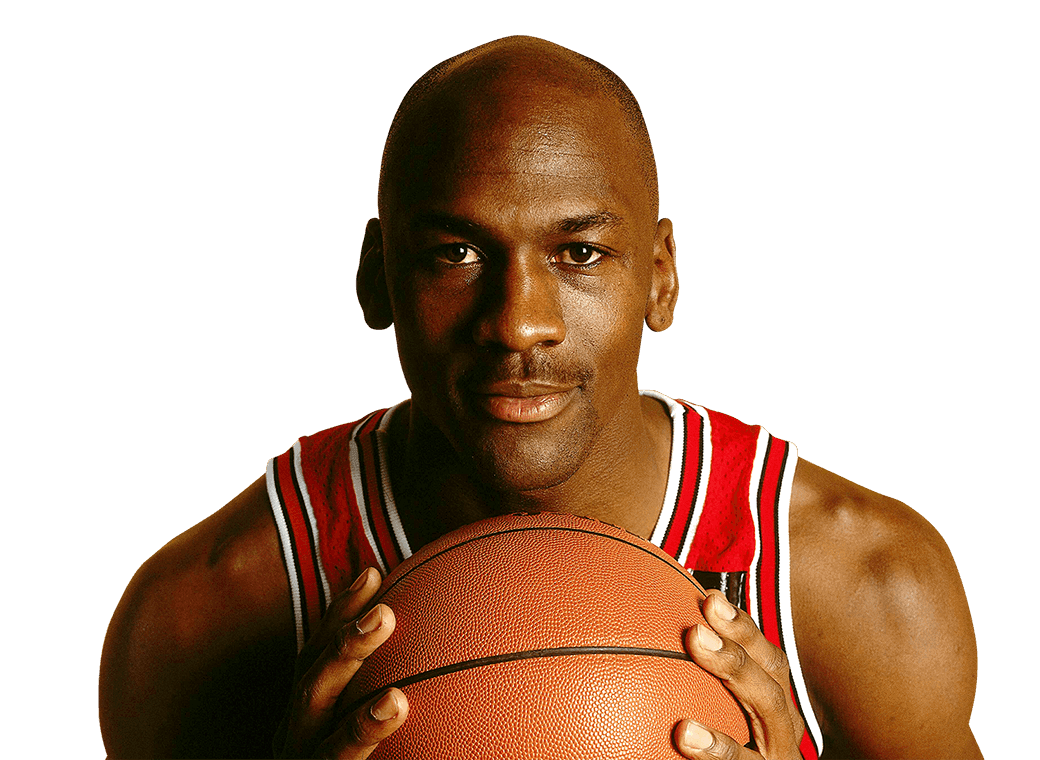
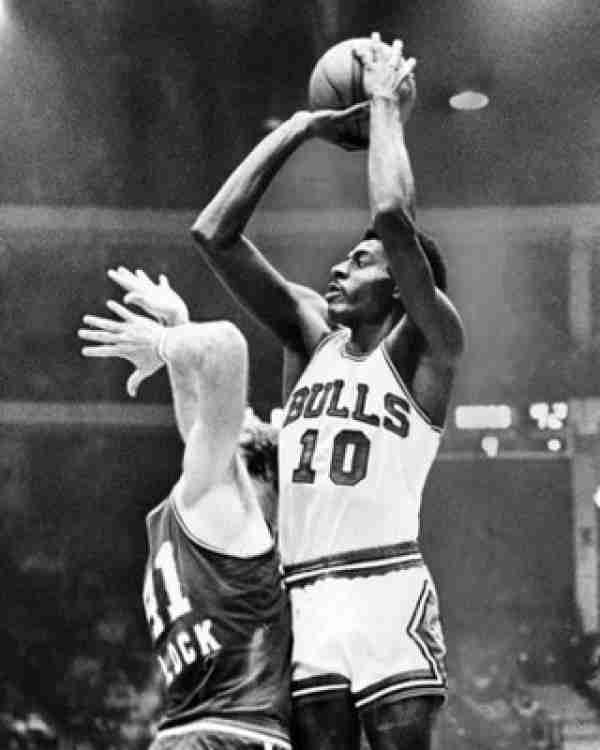
Michael Jordan's 30.12 career scoring average is the highest in NBA history, and the way he built it separates the number from the narrative. Jordan did not lead the league in scoring as a volume shooter who sacrificed efficiency. He won ten scoring titles as the most efficient high-usage player of his era, six times finishing among the top five in both points per game and field goal percentage in the same season.
The 1987-88 season is the cleanest summary: 35.0 points per game on 53.5 percent shooting, paired with his only Defensive Player of the Year award. A scoring champion and a defensive anchor, in the same season, on the same team. That combination has not been replicated. His offensive toolkit began at the elbow, extended through the mid-post, and finished with a runner in traffic that defenses had no clean answer for. Every part of the attack was built on footwork and misdirection — geometry where other players used athleticism.
The championship record is 6-0: six Finals appearances, six championships, six Finals MVP awards. No other player in league history has won Finals MVP in every Finals appearance. The 1996 Bulls went 72-10. The 1997 Flu Game in Salt Lake City. The 1998 Last Shot against Bryon Russell. Each performance reflected the same competitive structure: Jordan lifted when the series demanded it, and across thirteen NBA seasons, he never lost a series when he chose to close it.
His ten scoring titles exceed the combined total of Oscar Robertson, George Gervin, and Kevin Durant. His career playoff average of 33.4 points per game is the highest in history. The case for Jordan rests not only on the rings, but on the fact that the rings and the individual dominance arrived together, in the same city, at the same time.