This page contains affiliate links. We may earn a commission if you purchase through these links, at no extra cost to you. As an Amazon Associate I earn from qualifying purchases.
It's 6:15 AM at a gym in Las Vegas, and Drew Hanlen — the skill development coach behind Jayson Tatum, Joel Embiid, and Bradley Beal — is watching a seventeen-year-old kid dribble two basketballs simultaneously while walking backward. The kid's handles look smooth. The crossovers are fast. The between-the-legs combos would get a million views on Instagram.
Related: Ball Handling Drills for Basketball
Hanlen stops him after thirty seconds.
"Now do it with me guarding you."
The kid picks up the ball, Hanlen applies light pressure, and the handle that looked silky in isolation falls apart within three dribbles. The crossover is too wide. The eyes drop to the ball. The feet stop moving. Game-ready handle and drill-ready handle are two different skills — and social media has convinced an entire generation of players that the second one is the first.
Why Most Ball Handling Drills Don't Transfer
The drills that go viral on social media — the tennis ball catches, the four-ball juggling acts, the cone obstacle courses — train hand speed in isolation. They look impressive. They feel productive. And they have almost zero correlation with in-game ball handling ability.
Here's why: game dribbling isn't about hand speed. It's about three things working simultaneously:
- Eyes up — reading the defense, finding teammates, seeing the floor
- Body control — maintaining balance and acceleration through contact and changes of direction
- Decision-making — choosing the right dribble move for the defensive positioning you're reading in real time
Any drill that lets you look at the ball, stand still, or make moves without defensive context is training a skill that doesn't exist in basketball. The five drills below are used by NBA skill development coaches because they build functional handle — the kind that gets you past a defender, not just past a cone.
Drill 1: Stationary Pound Dribbles (5 Minutes)
This is the least exciting drill on the list. It's also the most important.
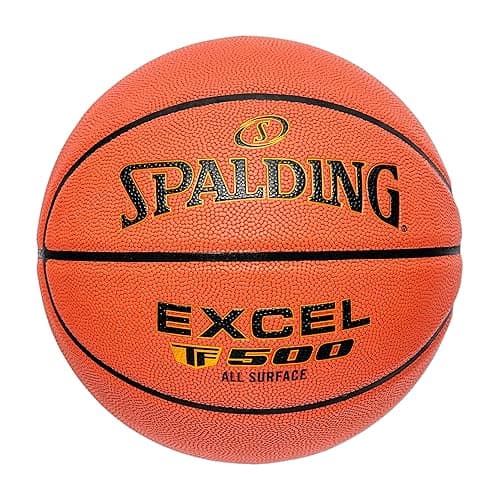
Stand in a triple-threat position. Pound the ball as hard as possible with your dominant hand for 30 seconds, then switch. The ball should hit the floor at knee height or below and return to your hand at waist height. Keep your eyes on a fixed point on the far wall — never on the ball.

Why it works: Hard dribbling reduces the time the ball is in the air and out of your control. The NBA average for dribble height on successful drives is significantly lower than what most recreational players use. Lower dribble = less time for defenders to reach in = more control in traffic. This drill programs hard dribbling as your default rather than something you do consciously.
The progression that matters:
- Week 1-2: Stationary pound, eyes up, 30-second intervals
- Week 3-4: Add a defensive slide (lateral movement) while pounding
- Week 5+: Add a live defender who reaches for the ball at random intervals
"Every player I work with starts here. Tatum does these. Embiid does these. If your handles aren't where you want them, the answer is almost always that your base dribble isn't hard enough." — Drew Hanlen
Drill 2: Two-Ball Dribbling With Eye Work (8 Minutes)
Dribble two basketballs simultaneously while a partner holds up random numbers with their fingers. Call out the numbers without stopping the dribble. Start with both balls hitting the floor at the same time (synchronous), then progress to alternating bounces.
Why it works: This is the gold standard drill for separating your hands from your eyes. In a game, you can't look at the ball — you need to be reading the defense, finding the open man, anticipating rotations. Two-ball dribbling with a visual stimulus forces your hands to operate on autopilot while your brain processes external information.
Common mistake: Most players focus on keeping the two balls synchronized. That's the wrong goal. The goal is to maintain the visual task (calling out numbers) without degradation. If your number-calling gets slower when the dribbling gets harder, you're not ready to progress — your hands are still stealing processing power from your eyes.
Advanced variation: Replace the number-calling with a tennis ball. Your partner tosses a tennis ball while you dribble two basketballs — you catch and toss back the tennis ball without losing either dribble. This adds a reaction-time component that simulates the unpredictability of live play.
Drill 3: Full-Court Dribble Attack (10 Minutes)
Start at one baseline. Dribble full speed to the opposite baseline using a specific move at each designated spot:
- Free-throw line: Crossover
- Half court: Between-the-legs
- Opposite free-throw line: Behind-the-back
- Opposite baseline: Spin move into a finish
Two rules: maintain full speed throughout (no slowing down for the moves), and keep your eyes up. Turn around, repeat with the opposite hand leading.
Why it works: Game dribbling happens at full speed, not jogging pace. The number one reason handles break down in games is that players practice their moves slowly and then can't execute them at game speed. This drill forces speed-to-move connection from day one.
The test: If you can't execute all four moves at 90%+ of your sprint speed without losing the ball, you haven't mastered them yet. Slow down, isolate the problem move, and rebuild. A crossover that works at 60% speed is not a crossover you own.
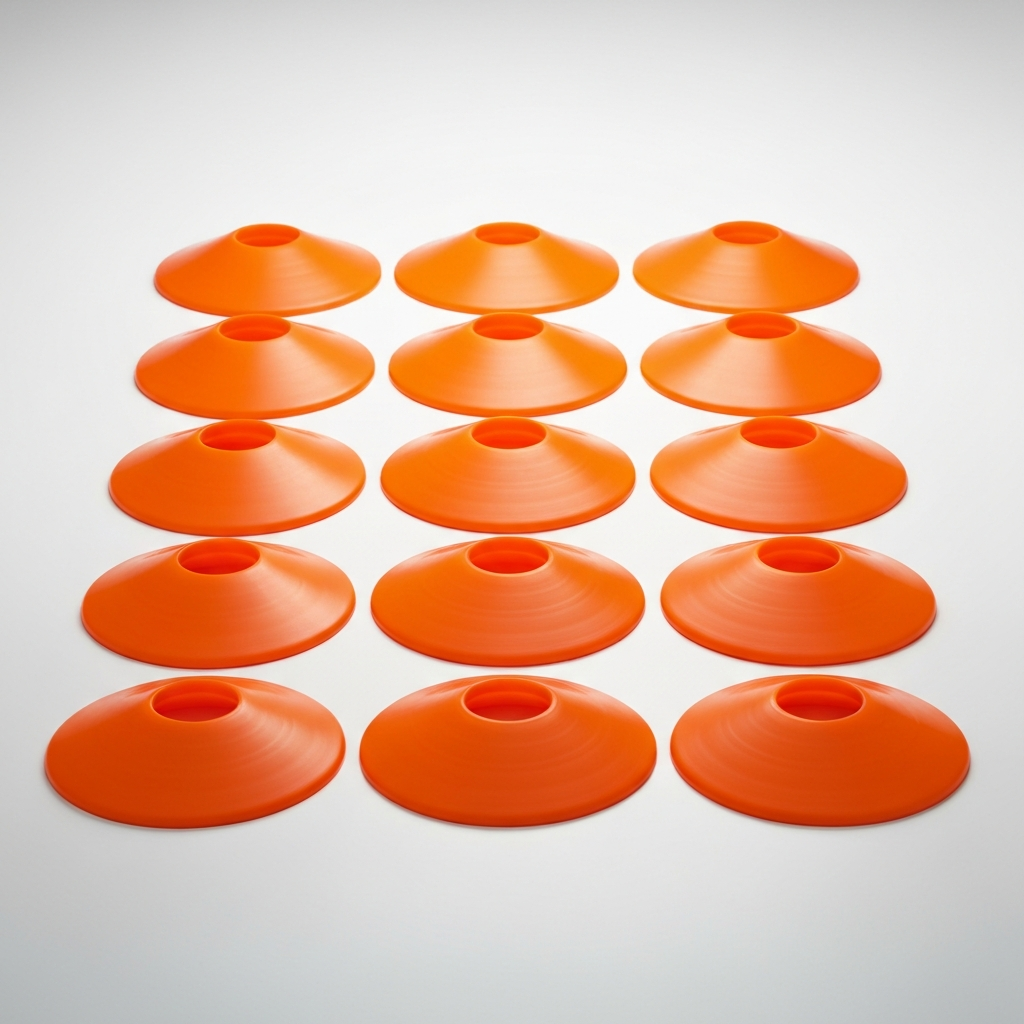
Drill 4: Chair/Cone Reads (10 Minutes)
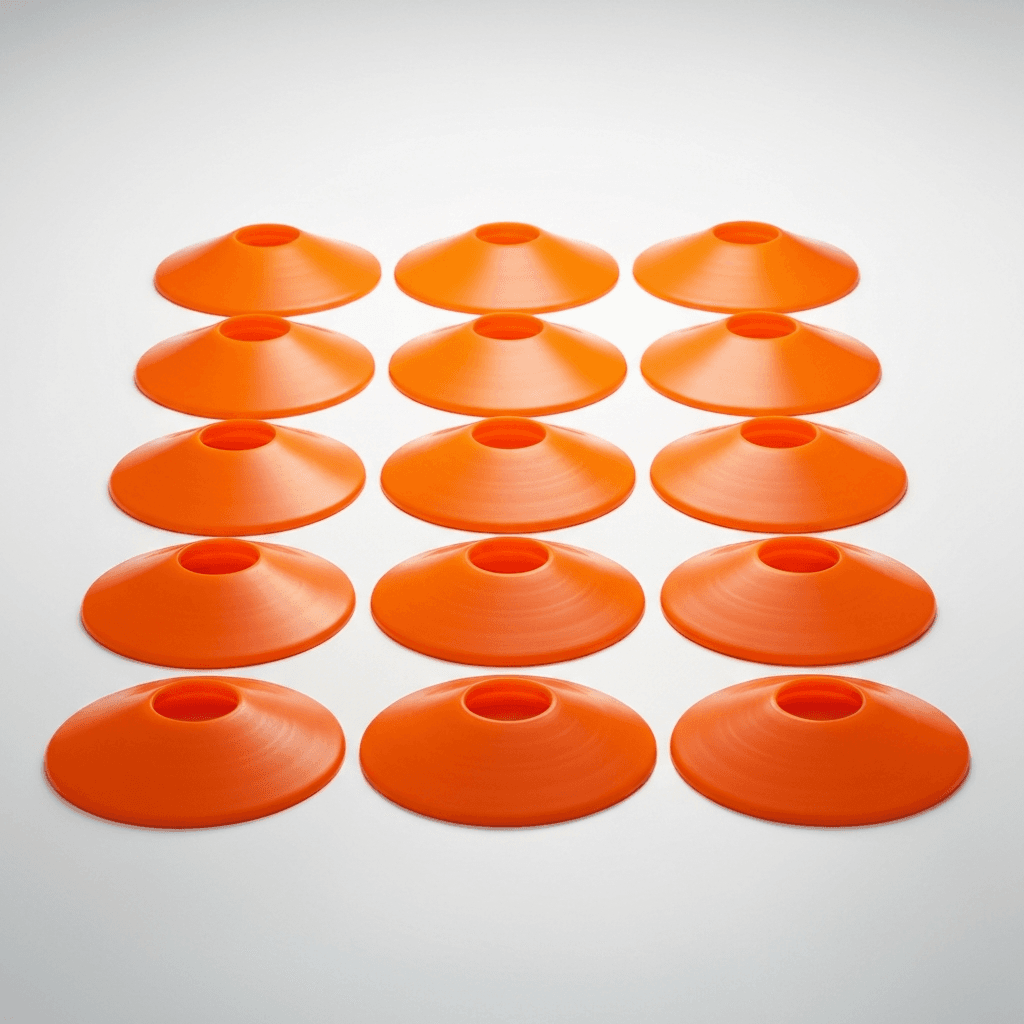
Set up a chair or cone at the free-throw line to simulate a defender. Approach at game speed and make a dribble move based on where the "defender" is positioned. Here's the key: have a coach or partner move the chair slightly left or slightly right before each rep. You read the positioning and choose the appropriate counter.
Chair shaded left? Attack right with a crossover. Chair shaded right? Between-the-legs to the left. Chair straight up? Hesitation into a drive.
Why it works: This is the bridge between drill work and live play. Most ball handling drills are pre-programmed — you decide the move before you start. In games, you decide the move based on what the defender gives you. Chair reads train the decision-making component that pure repetition misses.
Progression: Replace the chair with a live defender who stands still but positions differently each rep. Then allow the defender to move. Then allow the defender to reach. Each progression adds a layer of game reality that forces your handles to adapt rather than recite.
Drill 5: 1-on-1 Continuous (12 Minutes)
Play live 1-on-1 with a simple constraint: the offensive player gets exactly three dribbles to score from the three-point line. No more. If you haven't created a shot in three dribbles, the possession is over.
Why it works: This drill is the ultimate transfer exercise. It takes everything from drills 1-4 — hard dribbling, eyes-up awareness, speed-to-move connection, read-and-react decision making — and compresses it into a live, competitive context. The three-dribble limit prevents lazy dribbling and forces decisive, purposeful handle.
Three dribbles doesn't sound like many until you realize that the average NBA isolation scoring play uses 2.8 dribbles. The best ball handlers in the world don't need more than three dribbles to create separation. The limitation isn't limiting — it's realistic.
After running this drill consistently for two weeks, most players report a noticeable difference in pickup games: they're making decisions faster, wasting fewer dribbles, and getting to their spots more efficiently. The constraint trains efficiency, and efficiency transfers.
The 30-Day Program
Commit to this sequence four days per week for 30 days:
- Minutes 0-5: Drill 1 (Stationary Pounds)
- Minutes 5-13: Drill 2 (Two-Ball + Eye Work)
- Minutes 13-23: Drill 3 (Full-Court Attack)
- Minutes 23-33: Drill 4 (Chair Reads)
- Minutes 33-45: Drill 5 (1-on-1 Continuous)
Total time: 45 minutes. No partner needed for drills 1-3. Drills 4-5 require a partner but can be adapted for solo work (use reaction cones for reads, use a chair as a closing-out defender for 1-on-1 simulations).
Frequently Asked Questions
Why do social media ball handling drills not transfer to games?
The drills that go viral — tennis ball catches, four-ball juggling acts, complex cone obstacle courses — train hand speed in isolation. Game dribbling is not about hand speed. It is about three things working at the same time: eyes up reading the defense, body control through contact and changes of direction, and decision-making about which dribble move fits the defensive positioning you are reading right now. Any drill that lets you look at the ball, stand still, or make moves without defensive context is training a skill that does not exist in basketball. Drill-ready handle and game-ready handle are different skills.
Which drill in this guide is the most important to start with?
Stationary Pound Dribbles. It is the least exciting drill on the list and the one Drew Hanlen — the skill development coach behind Jayson Tatum, Joel Embiid, and Bradley Beal — starts every player on. Stand in triple threat, pound the ball as hard as possible with your dominant hand for 30 seconds, then switch. The ball should hit the floor at knee height or below and return to your hand at waist height. Keep your eyes on a fixed point on the far wall, never on the ball. Lower dribble means less time for defenders to reach in, which means more control in traffic. Hanlen's framing: "If your handles aren't where you want them, the answer is almost always that your base dribble isn't hard enough."
What does two-ball dribbling actually train if I never use two balls in a game?
Two-ball dribbling separates your hands from your eyes. In a game, you cannot look at the ball — you have to read the defense, find the open man, and anticipate rotations. Dribble two basketballs while a partner holds up random numbers with their fingers and call the numbers out without stopping the dribble. The goal is not to keep the two balls synchronised — it is to maintain the visual task without degradation. If your number-calling slows down when the dribbling gets harder, your hands are still stealing processing power from your eyes, and you are not ready to progress. The advanced version replaces numbers with a tossed tennis ball you have to catch and return.
Why does the 1-on-1 drill cap each possession at three dribbles?
Three dribbles sounds restrictive until you look at the data: the average NBA isolation scoring play uses 2.8 dribbles. The best ball handlers in the world do not need more than three dribbles to create separation. The cap prevents lazy dribbling and forces decisive, purposeful handle — every dribble has to do work toward creating a shot. Players who run this drill consistently report a noticeable difference in pickup games within two weeks: faster decisions, fewer wasted dribbles, and more efficient paths to their spots. The constraint trains efficiency, and efficiency transfers.
How long does the 30-day program take per session and how soon will I see results?
The full sequence — five drills running 0-5, 5-13, 13-23, 23-33, and 33-45 minutes — totals 45 minutes, four days per week. Drills 1-3 require no partner; drills 4 and 5 need a partner but adapt for solo work using reaction cones for reads and a chair as a closing-out defender. Most players notice tighter handle within the first two weeks and a meaningful difference in pickup-game decision-making by the end of the 30 days. The players who get better are not the ones who pick the flashiest drills — they are the ones who practise the right drills at game speed, with their eyes up, against resistance.
The players who get better at ball handling aren't the ones who practice the flashiest drills. They're the ones who practice the right drills, at game speed, with their eyes up, against resistance. Forty-five minutes a day. Thirty days. Your handle will be unrecognizable.
Related guides
Enjoying this analysis?
Get more breakdowns like this delivered to your inbox.