This page contains affiliate links. We may earn a commission if you purchase through these links, at no extra cost to you. As an Amazon Associate I earn from qualifying purchases.
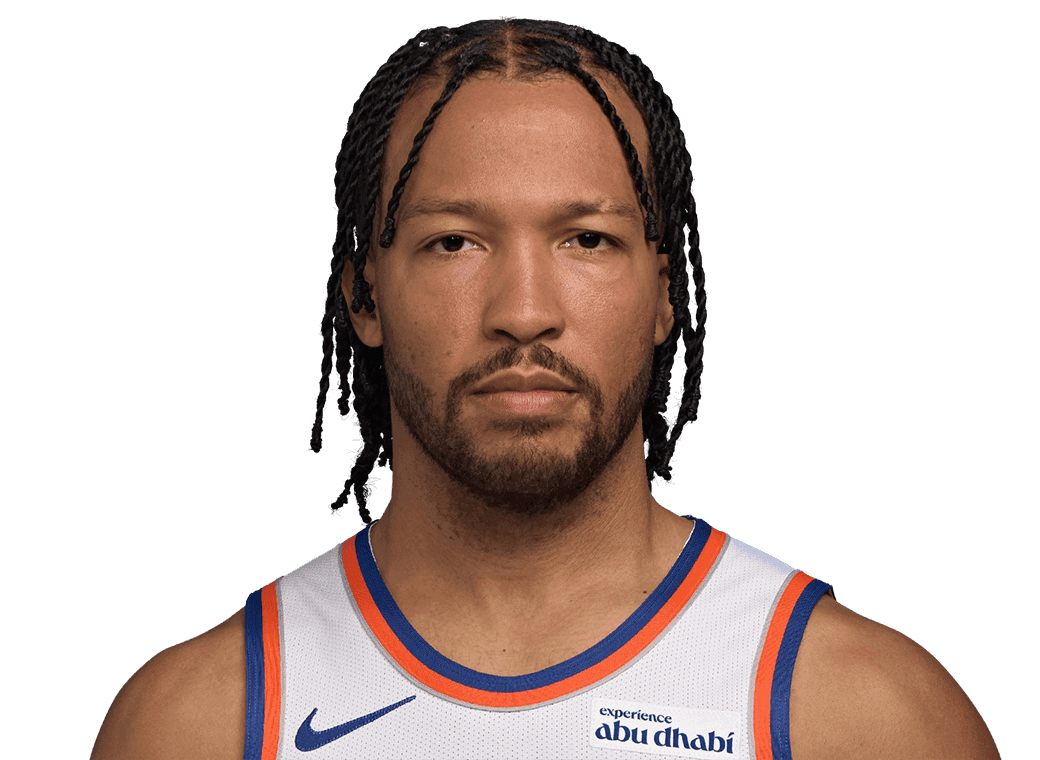
The word "cornerstone" gets handed out too easily in basketball, usually to whoever scores the most. Jalen Brunson's 2026 season is the argument for a stricter definition. The 6-foot-2 guard the rest of the league spent a decade underrating led the New York Knicks to their first championship since 1973, closed the Finals with a 45-point Game 5, and collected both Eastern Conference Finals MVP and Finals MVP along the way. His playoff run led the field at 28.4 points per game. The scoring, though, is the surface. What this piece examines is what sits underneath it: the decision-making that holds an offense together in a half-court playoff game, the refusal to break that defined the run, and the way New York assembled the Nova Knicks roster specifically to fit what Brunson does well.
The Coronation at the Garden
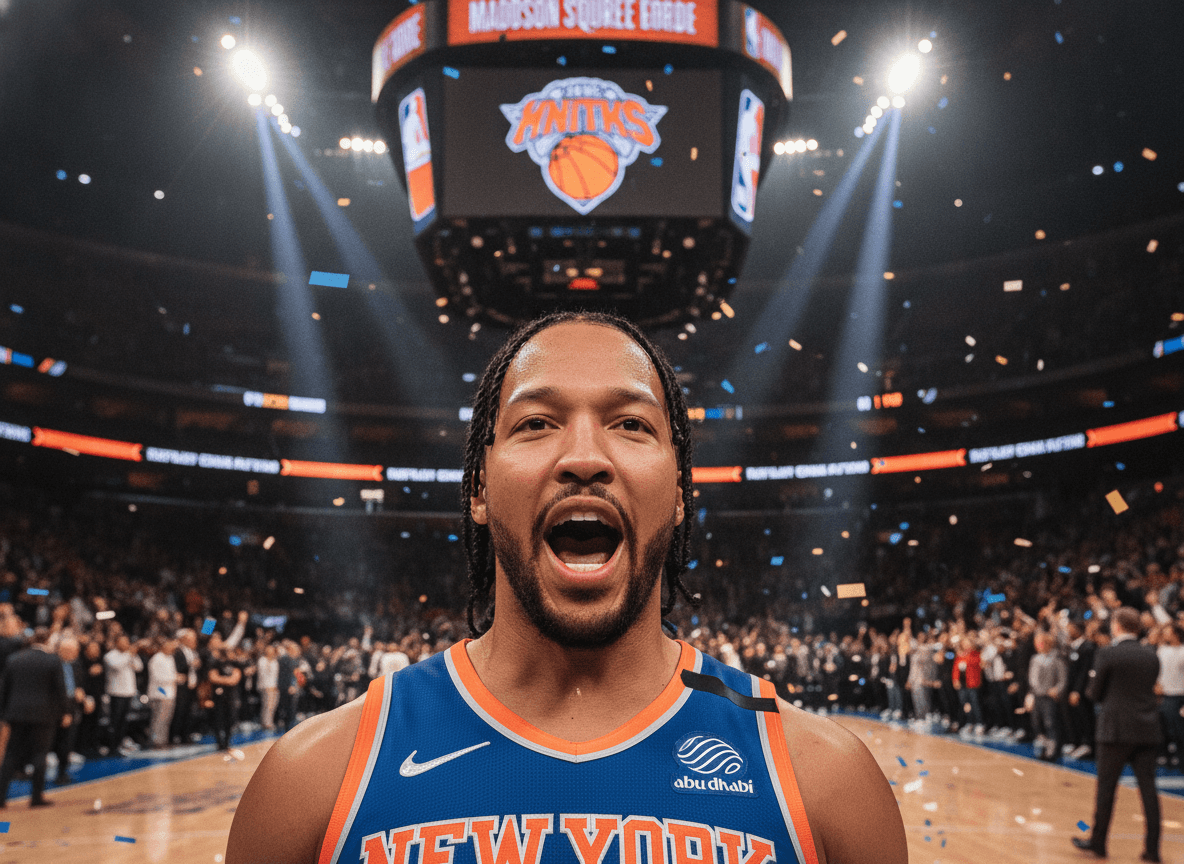
For 53 years, "next year" was the most-used phrase in New York basketball. On June 13, 2026, it finally became "this year." The New York Knicks closed out the San Antonio Spurs 94-90 in Game 5 of the NBA Finals to win the franchise's first championship since 1973 — and the man holding the Bill Russell Trophy when the confetti fell was Jalen Brunson, the 6-foot-2 point guard the rest of the league spent a decade underrating.

Brunson poured in 45 points in the clincher on 14-of-27 shooting, including 4-of-7 from three and a clinical 13-of-15 at the line. It was the exclamation point on a playoff run that averaged a field-leading 28.4 points per game and earned him both Eastern Conference Finals MVP and Finals MVP. This is not a story about a hot streak. It is a story about what a true franchise cornerstone actually looks like — and why the Knicks built everything around him.
What "Franchise Cornerstone" Really Means
The phrase gets handed out too easily. A cornerstone is not just your best scorer; it is the player whose habits, temperament, and decision-making set the standard the rest of the roster organizes itself around. By that definition, Brunson has been the Knicks' cornerstone since the day he signed in the summer of 2022 — long before the banner.
The tell is consistency under pressure. In April 2025, Brunson won the NBA's Clutch Player of the Year award, having led the league in made field goals in clutch situations. Cornerstones are defined by what they do when the math gets hard and the defense knows exactly who is getting the ball. New York spent two seasons learning they could hand Brunson the final four minutes and trust the outcome. In 2026, that trust paid off at the highest possible stakes.
A Title Built on Refusing to Break
The 2026 Knicks did not coast to a ring. They earned a reputation as the league's most stubborn closing team. New York rallied from double-digit deficits in all four of its Finals victories, and Game 4 produced the largest comeback in NBA Finals history — a 29-point hole erased in a 107-106 win that swung the series.

The path there was its own statement:
- First Round: defeated the Atlanta Hawks 4-2, including a game in which the Knicks set an NBA playoff record for the largest halftime lead (47 points) and a franchise record for largest playoff margin of victory (51).
- Conference Semifinals: swept the Philadelphia 76ers 4-0.
- Conference Finals: swept the Cleveland Cavaliers 4-0 to reach the franchise's first Finals since 1999.
- NBA Finals: beat the San Antonio Spurs 4-1.
A team takes on the personality of its cornerstone. Brunson does not panic when a possession breaks down or a quarter goes sideways — he resets, gets to his spots, and makes the next correct read. Across a three-week title run, that calm became contagious.

Court IQ: Why Brunson's Game Translates to Winning
Brunson is the rare modern star who wins without elite length or above-the-rim athleticism. His edge is craft. He finished the 2025-26 season averaging 26.0 points, 6.8 assists, and 3.3 rebounds while shooting 46.7% from the field and 36.9% from three — efficiency built on a few repeatable skills:

- Change of pace: Brunson manipulates speed better than almost anyone, lulling defenders before a sudden burst into the lane or a step-back into his midrange.
- The lost art of the midrange: In a three-and-layups league, his pull-up game in the 8-to-16-foot range is a cheat code against playoff defenses that take away the rim and the arc.
- Footwork and contact balance: He absorbs bumps, keeps his base, and finishes through bigger defenders — which is also why he lives at the free-throw line in crunch time.
- Decision speed: 6.8 assists from a "score-first" guard reflects a player who reads help defense instantly and punishes it.
That is the ball knowledge that travels into June. Skills that depend on raw athleticism fade against elite postseason defenses; skills built on IQ and touch get sharper.
The Architecture Around Him: The Nova Knicks
No cornerstone wins alone, and New York surrounded Brunson with a roster that fit him precisely. The championship starting five — Brunson, Josh Hart, Mikal Bridges, OG Anunoby, and Karl-Anthony Towns — paired his shot creation with two-way wing size, switchable defense, and a stretch big in Towns whose scoring and passing complemented Brunson's playmaking. The bench gave real minutes to Deuce McBride, Landry Shamet, Mitchell Robinson, Jordan Clarkson, and Jose Alvarado.

There is also a deeper story woven through the locker room. Brunson, Hart, and Bridges were teammates at Villanova, and with the 2026 title they became the first trio of players to win both an NCAA and an NBA championship together. The "Nova Knicks" chemistry was not a marketing line — it was a foundation of trust that showed up in every late-game possession.
From No. 33 to Franchise Pillar
The most instructive part of Brunson's story is how unlikely it once looked. A two-time NCAA champion at Villanova (2016 and 2018) and winner of the Wooden, Naismith, and Bob Cousy awards, he still slipped to the 33rd pick of the 2018 draft, taken by the Dallas Mavericks in the second round. For four seasons he was a quality role player whom the league filed under "good, not a building block."

New York saw it differently. The Knicks signed him in 2022, named him the 36th captain in franchise history, and watched him make three straight All-NBA Second Teams (2024, 2025, 2026). The lesson for any front office: pedigree and production in winning environments matter more than the eye-test boxes a player fails to check. Brunson failed the height test and the athleticism test. He passed the only one that ends in a parade — the standard he sets every day.
The Cornerstone Blueprint
On June 18, 2026, New York threw its first championship parade in over half a century. What the Knicks proved is repeatable, even if it is not easy: identify the player whose habits you can build a culture on, pay him, empower him, and assemble role players who amplify rather than duplicate his strengths.

Jalen Brunson did not just end a 53-year wait. He gave a blueprint to every franchise still searching for its cornerstone — and a reminder that the most valuable thing a star can offer is not a highlight, but a standard. That is 143: love of the game expressed as the discipline to do the hard thing, on the biggest stage, again and again.
Enjoying this analysis?
Get more breakdowns like this delivered to your inbox.