Ang pahinang ito ay naglalaman ng mga affiliate link. Maaari kaming kumita ng komisyon kung bibili ka sa pamamagitan ng mga link na ito, nang walang dagdag na gastos sa iyo. As an Amazon Associate I earn from qualifying purchases.
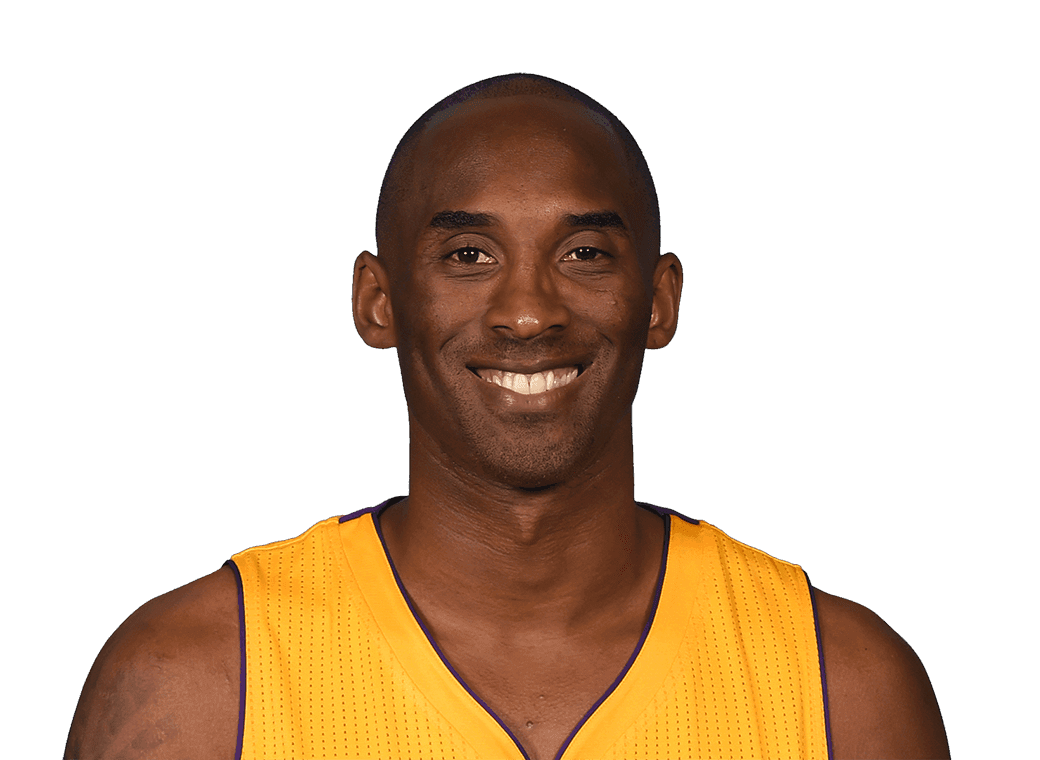
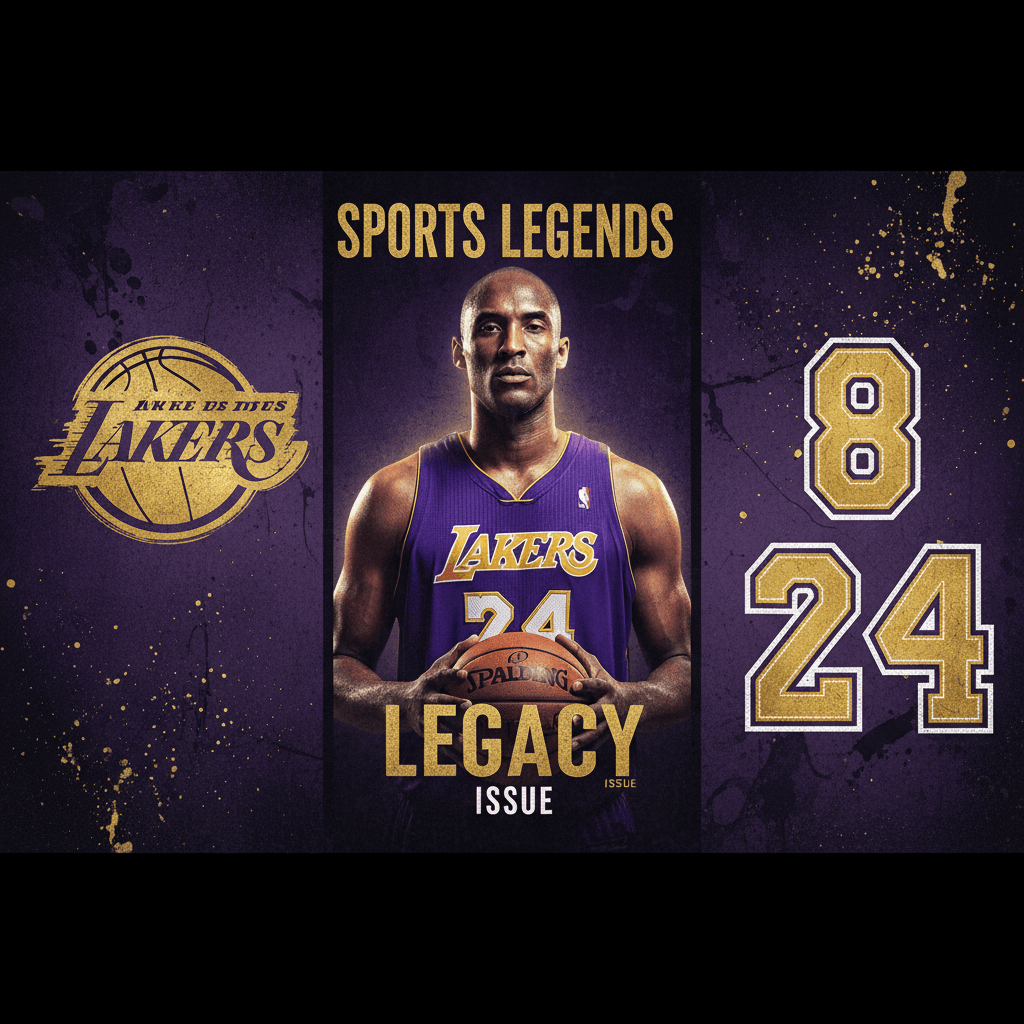
December 18, 2017. The Lakers played the Golden State Warriors at halftime of nothing in particular, and then the game stopped mattering. The lights dropped. Two banners climbed toward the Staples Center rafters at the same moment, side by side, and the building understood it was watching something that had never happened before in the history of the sport: a single franchise retiring two numbers for one man. #8 went up on the left. #24 went up on the right. Kobe Bryant stood at center court between his wife and his daughters, and for a few seconds the most relentless competitor the building had ever housed simply looked up, the way the rest of us were looking up, at twenty years of his own life hanging in the dark. There was no good way to choose between the numbers, because there had been no good way to choose between the two players who wore them.
The Lakers did not retire two jerseys out of sentiment. They retired two because the career honestly required two.
The man who wore #8 from 1996 to 2006 and the man who wore #24 from 2006 to 2016 were not the same basketball player. They shared a body, a city, and an obsession, and almost nothing else. One was fury. The other was craft. To hang only one number would have been to tell half a story about a player who never gave the league a year that did not matter.
The Kid From Lower Merion
Kobe Bryant came into the league at seventeen, straight out of Lower Merion High School in suburban Philadelphia, the son of a former NBA journeyman named Joe "Jellybean" Bryant who had carried the family to Italy for a chunk of Kobe's childhood. The boy grew up speaking Italian, watching European basketball, and studying NBA games on tapes his grandfather mailed across the Atlantic. He returned to America already strange — too serious, too studied, a teenager who talked about footwork the way other kids talked about sneakers.
The 1996 draft sent him to the Charlotte Hornets at thirteenth overall and then, within the hour, to the Los Angeles Lakers in a draft-night trade engineered by Jerry West, who had watched the kid work out and come away convinced he was looking at something the rest of the league had undervalued by a dozen picks. Kobe chose #8 — a number he traced back to the 143 he had worn at the Adidas ABCD Camp, the digits of which add to eight. He spent his rookie year coming off the bench behind grown men and air-balling three straight jumpers in a playoff loss to Utah. He was eighteen. He took those air-balls personally for the next twenty years.
The #8 Era: All Fury (1996–2006)
The thing about young Kobe Bryant was that he played as if every possession were a referendum on whether he belonged. There was no governor on the engine. He attacked the rim through traffic, took fadeaways from angles that had no geometric right to go in, and turned defenders into spectators with between-the-legs moves that ended at the rim before they understood the dribble was over. He made the All-Star team in his second season. By his early twenties he was the most feared perimeter scorer alive.
What turned the fury into a dynasty was the arrival of a 325-pound force named Shaquille O'Neal and a coach named Phil Jackson, who brought Tex Winter's triangle offense west from Chicago and pointed it at the most physically dominant center the modern league had produced. Kobe on the wing and Shaq on the block became the most punishing inside-outside pairing of their generation. You could not double the post without surrendering Kobe. You could not stay home on Kobe without surrendering Shaq. Defenses spent three straight Junes choosing which way to lose.
They won the 2000 title, the 2001 title, and the 2002 title — three in a row, the only three-peat of the post-Jordan era. The defining image of young Kobe came in Game 4 of the 2000 Finals against Indiana: Shaq fouled out, the game went to overtime, and a twenty-one-year-old playing on a badly sprained ankle scored eight of the Lakers' points in the extra period and won the game. A kid not old enough to legally buy a drink had carried a Finals overtime on one good leg, and he had done it without appearing to consider any other outcome possible.

The #8 years ended with the single most famous scoring night of his career. On January 22, 2006, against the Toronto Raptors, Kobe Bryant scored 81 points — the second-most points scored in a single NBA game, behind only Wilt Chamberlain's 100. He scored 55 of them in the second half, dragging the Lakers back from an eighteen-point deficit because the alternative was losing, and losing was the one thing he refused on principle. Earlier that same season he had scored 62 in three quarters against the Dallas Mavericks, out-scoring the entire Dallas roster through three periods before sitting down for the fourth. The #8 jersey was a human highlight reel set to maximum volume, and it earned four All-NBA First Team selections before he turned twenty-eight.
The #24 Era: All Craft (2006–2016)
Before the 2006–07 season, Kobe changed his number to #24 — the number he had worn at Lower Merion. He framed it as a reset, a new chapter, a deliberate turning of the page. It was not a cosmetic decision. The player who emerged in #24 had subtracted the recklessness and kept the obsession. He had become a craftsman.

The footwork that had always been good became the best in the league. The fadeaway — already his signature — became an unguardable, geometry-defying release that he could launch over either shoulder from anywhere inside the arc. His defense reached its apex; the majority of his All-Defensive selections came in the #24 jersey. In 2008 he won the only regular-season MVP award of his career, hauling a roster built around Lamar Odom and a young Pau Gasol to the best record in the Western Conference through what could only honestly be described as force of will.
Then came the back-to-back titles that defined the era. The 2009 championship against Orlando was a clinic — Kobe in total command of a Finals, named Finals MVP for the first time, a player who had finally won a title as the unquestioned center of his own team rather than the brilliant second option. The 2010 championship against the Boston Celtics was something rawer and, in its way, more revealing of who he was.

Game 7. Staples Center. The Celtics — the rivals who had beaten him in the Finals two years earlier — across the floor. And Kobe shot terribly: 6-of-24 from the field, one of the worst shooting nights of his career, on the biggest stage of his life. It should have ruined him. Instead he grabbed fifteen rebounds, defended like the title depended on each possession, and made the plays in the fourth quarter that a missing jump shot had no right to allow. The Lakers won 83–79. He earned his second straight Finals MVP not by scoring beautifully but by refusing, on a night when his best weapon abandoned him, to let his team lose. That is the truest portrait of #24 Kobe there is.
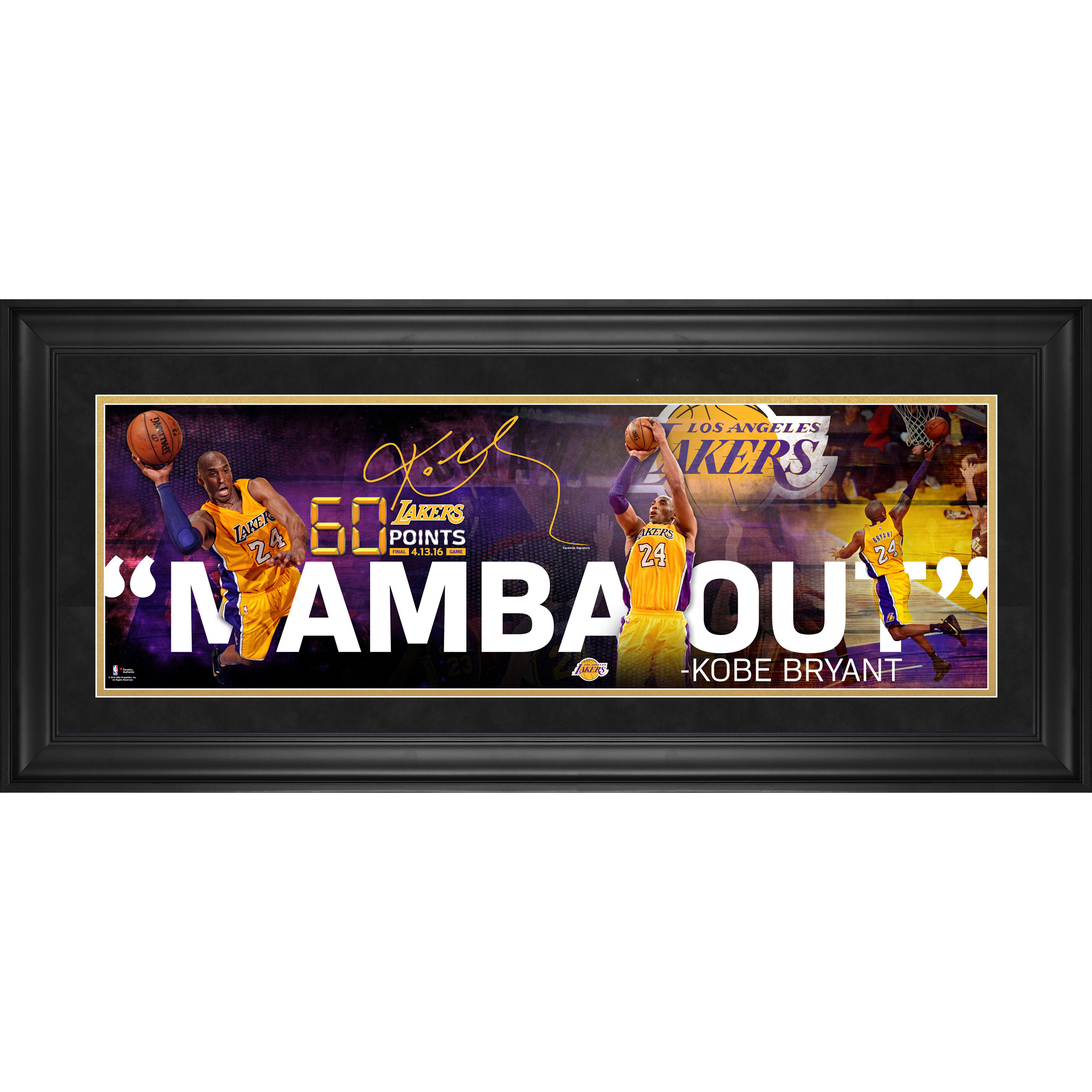
The torn Achilles came on April 12, 2013. He was thirty-four, averaging better than twenty-seven points a game, dragging a worn-down roster toward the playoffs because no one else would. He went down, stood back up, and — with a ruptured tendon — walked to the line and calmly made both free throws before limping off the floor under his own power. He missed most of the next two seasons. Then, at thirty-seven, in his final NBA game against Utah on April 13, 2016, he scored 60 points. It was absurd. It was beautiful. It was completely, unmistakably Kobe.
Mamba Mentality
Somewhere in the transition from #8 to #24, Kobe stopped being only a basketball player and became an idea. He named it the "Mamba Mentality," and for once an athlete's self-mythology turned out to be load-bearing. It described a real thing: the 4 a.m. workouts, the obsessive film study, the refusal to leave a flaw uncorrected, the willingness to take — and own — the last shot whether it fell or not. He demanded the ball in the final seconds and accepted full public responsibility when it did not go in, because to him the alternative, deferring the moment to someone else, was the only genuine failure.

That philosophy traveled further than the sport itself. In Manila, in Shanghai, in Belgrade, in São Paulo, kids who learned the game in three different languages learned the fadeaway and the snarl that went with it. He became, alongside the small handful of truly global basketball figures, a player whose appeal crossed every border the league had not yet crossed on its own. The Mamba Mentality became a thing people invoked in offices and classrooms and weight rooms that had nothing to do with basketball — a shorthand for the belief that obsessive preparation is not a personality flaw but a virtue.
The Numbers Behind the Numbers
- 5 NBA championships (2000, 2001, 2002, 2009, 2010) — the first three in #8, the last two in #24
- 2 Finals MVP awards (2009, 2010) — both in the #24 era
- 1 regular-season MVP (2008)
- 18× All-Star — one of the most selected players in league history
- 15× All-NBA, 12× All-Defensive Team
- 81 points against Toronto on January 22, 2006 — second-most in a single NBA game ever
- 60 points in his final game, April 13, 2016, at age thirty-seven
- 33,643 career points — third on the all-time scoring list at the time of his retirement
- 20 seasons, all in a Lakers uniform — a rare one-franchise career in the modern game
- Two retired numbers hanging in the same building — the only player in NBA history honored that way by one team
None of these figures contains what Kobe Bryant meant. He arrived as a teenager who spoke two languages and believed, against all available evidence, that he would one day be the best player in the world, and then he spent twenty years making the belief retroactively reasonable. He never changed teams. He took the franchise from a Shaq-era dynasty through a difficult rebuild and back to the top of the league as its sole leader. He turned a number on his back into a verb for a way of working.

Why Both Numbers Hang Forever
The Lakers raised #8 and #24 to the rafters on December 18, 2017, and the reasoning the franchise offered was the only reasoning that held up: both numbers represented iconic chapters of the same career, and there was no honest way to honor one without honoring the other. In the #8 jersey he averaged roughly twenty-five points a game across a decade. In the #24 jersey he averaged roughly twenty-five points a game across the next one. Both produced All-Star seasons, All-NBA selections, and championships. To choose between them would have been to erase half of a twenty-year career that never had a meaningless stretch.
On January 26, 2020, Kobe Bryant died in a helicopter crash alongside his thirteen-year-old daughter Gianna and seven others. The numbers in the rafters changed meaning that morning. #8 and #24 stopped being a record of basketball and became something closer to a memorial — symbols of the Mamba Mentality and of a life that had insisted, at every turn, on excellence as a daily discipline rather than an occasional achievement.

The two banners hang in the same building as the other names that define what a Laker is supposed to be — beside Magic Johnson's #32 and the Showtime era it represents, beside Shaquille O'Neal's #34 and the dynasty the two of them built together, beside Jerry West's #44, the logo himself, the man who had traded for Kobe on draft night before anyone else understood what he was getting. None of those numbers, on its own, is the franchise. Together they are its spine.
And Kobe is the only one who needed two numbers to tell his part of the story. The #8 era and the #24 era are not a single player's career filed under two headings. They are two complete basketball lives — the kid who attacked the world to prove he belonged, and the master who had nothing left to prove and worked harder than ever anyway. The rafters hold both because both earned their place, separately and completely. For the Lakers, there was simply no other choice.
Nagustuhan mo ba ang analysis na ito?
Makakuha ng mas marami pang analysis na tulad nito sa iyong inbox.