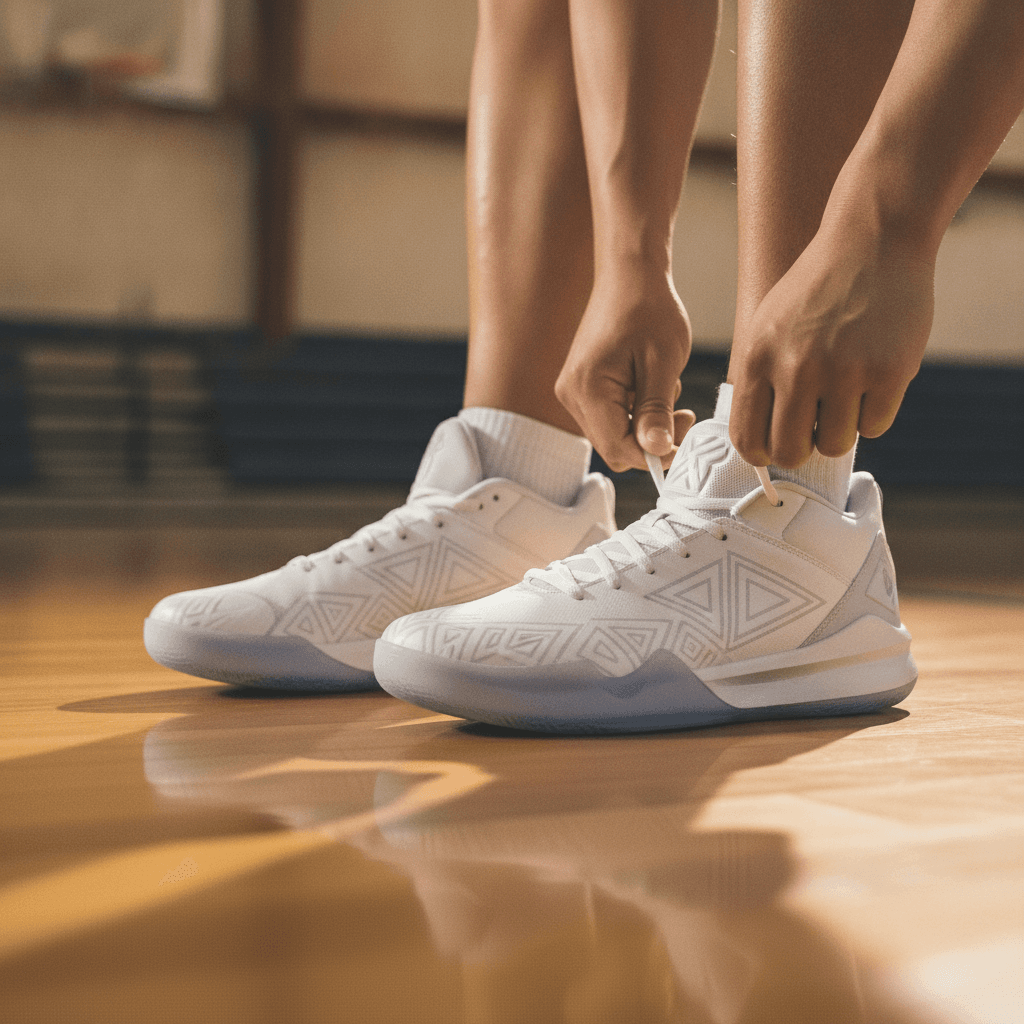
Break them in by wearing them in short, low-intensity sessions before you ever play a real game. Start with 20–30 minutes indoors in your game socks, laced properly, then add court time gradually over one to two weeks. Skip heat guns and soaking — they warp foam and weaken the glue.
- Break-in is gradual exposure, not force — short sessions first, full games last.
- Most stiff pairs feel game-ready within 2–4 weeks of consistent wear.
- Heat guns and water-soaking can permanently damage foam midsoles and adhesives.
- Always wear your actual game socks so the fit adapts correctly.
- Sharp, fixed-point pain past two sessions is a fit problem, not stiffness.
A new pair of basketball shoes should feel snug and supportive — not like a punishment. Yet almost every stiff, high-support hoop shoe needs a short break-in before it moves the way you do, and rushing that step is how you end up with heel blisters in the first quarter. The good news: breaking them in is simple, mostly free, and takes patience more than tricks. If you are still choosing a pair, our roundup of the best basketball shoes of 2026 and the best basketball shoes under $100 both flag which models run stiff out of the box.
This guide gives you a structured, safe method: why new shoes hurt, a day-by-day timeline, the lacing and sizing fixes that stop pain fast, and the popular internet "hacks" that quietly ruin your shoes. If your feet are on the wider side, pair this with our picks for wide feet, and if you hoop on asphalt, our best outdoor basketball shoes guide covers models built for concrete. The method below works the same regardless of which pair you land on.
Why do new basketball shoes hurt at first?
New hoop shoes hurt because their support structures are stiff by design and haven't yet flexed to your foot. Firm foam midsoles, TPU heel counters, and dense knit or synthetic uppers all start rigid, so they rub and press at your heel, big-toe joint, and instep until they soften and mold to your shape.
That rigidity is a feature, not a defect — the same stiff heel counter and taut upper that pinch on day one are what lock your foot down on a hard crossover later. WearTesters routinely notes that support-focused models feel "stiff" or "clunky" before they settle; their reviews flagged both the Nike KD 19 and the Kobe 3 Protro as pairs that reward patience once broken in. The friction you feel early is your foot and the shoe negotiating a fit. Break-in simply speeds that negotiation up without tearing your skin in the process.
What's the safe, step-by-step way to break in basketball shoes?
Wear them in graduated doses: short indoor sessions first, light court movement next, full games last. This lets the foam and upper flex to your foot while your skin toughens at the contact points, which is exactly what prevents blisters.
Here is the method, in order:
- Wear your real game socks. Fit adapts to whatever you'll actually play in, so break in with the same socks — not thin house socks. If a spot still pinches, a thicker sock adds cushion and gently stretches that panel.
- Lace them properly and walk indoors, 20–30 minutes. KURU Footwear recommends starting with short 20–30 minute sessions and building up daily. Do this on carpet so you can return them if they don't fit.
- Add light court work. Once indoor walking is painless, do easy shooting, footwork, and short shuffles — no full-speed cuts yet.
- Pre-treat known hot spots. Podiatry clinics advise applying moleskin, tape, or a blister balm to the heel, the side of the big-toe joint, and any toe knuckles that rub, before they blister rather than after.
- Scale up to scrimmage, then games. When a full practice feels fine, you're game-ready.
What does a day-by-day break-in timeline look like?
A realistic timeline is one to two weeks for most shoes, longer for heavily padded high-tops. Podiatry sources put visible improvement at roughly two to four weeks of consistent wear, so treat the schedule below as a floor you can stretch if a pair runs especially stiff.
Lightweight, low-cut guard shoes with mesh or thin knit can compress this to a few days. Structured, high-support models — the ones with firm midsoles and tall heel counters — sit at the long end. Don't skip stages to force the pace; the schedule is the safety mechanism.
Which break-in methods should you avoid — and why?
Avoid concentrated heat and water-soaking. Both are borrowed from leather-boot break-in and actively damage the foam-and-synthetic build of modern basketball shoes — the fix that "works" often ruins the shoe you paid for.
The table sorts the popular methods by how much risk they carry for a hoop shoe specifically:
| Method | What it does | Risk level | Verdict |
|---|---|---|---|
| Short indoor wear sessions | Lets foam and upper flex to your foot gradually | Low | Do this |
| Game socks + proper lacing | Removes pressure points, locks the heel down | Low | Do this |
| Thick socks on tight panels | Gently stretches the upper in problem zones | Low | Optional, helps |
| Brief low-heat hair-dryer pass | Softens one specific tight panel | Medium | Only with restraint |
| Heat gun / high heat | Softens glue and foam quickly and unevenly | High | Avoid |
| Soaking / submerging in water | Saturates the foam midsole; warps and takes days to dry | High | Avoid |
| Freezer water-bag trick | Expanding ice pushes out tight spots | Medium | Skip for foam/knit |
Why heat is dangerous: athletic-shoe adhesives and EVA foam are not built for high temperatures. Footwear specialists and Nike's own care guidance warn that a hair dryer or dryer can soften the glue and foam, causing soles to separate or a midsole to lose its shape — damage that doesn't reverse. A heat gun concentrates that risk. A brief pass with a hair dryer on low, held at least six inches away, is the only heat method that's defensible, and it's easy to overdo.
Why soaking is worse for hoop shoes: the classic water-soak trick is for stiff leather boots. A basketball shoe's foam midsole absorbs and holds water, which can warp the ride height, breed odor, and take days to dry — and if you speed-dry it with heat, you stack a second failure mode on top. The freezer trick has the same problem: it's a rigid-leather hack that introduces moisture into materials that don't want it. Target socks and wear time instead.
How do modern shoe materials actually break in?
Different materials soften on different timelines, so knowing what's on your foot sets your expectations. Knit and mesh mold fastest; firm foam and TPU take the longest and never fully "soften" — they just settle.
Knit and woven uppers: these stretch and conform to your specific foot shape over a short break-in. WearTesters describes exactly this — the knit "will stretch in certain sections as it gets used to your foot shape." Expect a day or two, not weeks. Synthetic and leather-look uppers: slower, and they crease at the flex point before they feel free. Foam midsoles (EVA, Nike React-style compounds, Zoom Air units): these compress and lively up with use rather than stretch, which is why the ride feels better after a few sessions. TPU heel counters and cages: the hard support pieces don't soften meaningfully; if one digs in permanently, that's a fit issue, not a break-in one.
Can lacing and sizing fixes stop the pain faster?
Often, yes — a lot of "break-in" pain is really a lacing or sizing mismatch you can solve in minutes. Before you log more hours, rule those out.
Heel slipping or blistering? Use a heel-lock (lace-lock) by threading the top eyelets into the loops on each side and cinching — it anchors the heel without over-tightening the whole shoe. Pressure across the top of the foot? Skip the eyelet over the sore spot, or switch to a gap-lacing pattern to relieve that zone. Toes cramped or sliding forward? You want roughly a thumb's width of space at the end; if there's less, the shoe is short. Wide-footed players especially should read our wide-feet shoe guide — a proper-width pair prevents the sidewall pinch that no break-in ever fixes.
How do you tell a wrong-fitting shoe from one that's just stiff?
Stiffness eases; a wrong fit doesn't. If the discomfort is broad, dull, and shrinking session over session, it's normal break-in. If it's a sharp, fixed-point pain that returns to the same spot every time, that's a fit or shape mismatch.
Specific red flags: numbness or tingling (the shoe is too tight or too narrow), a sharp pinch at one exact point that never moves, or pain that hasn't improved at all after two or three sessions. Podiatrists advise that persistent, sharp foot pain beyond a couple of sessions can signal a poor fit — or aggravate conditions like plantar fasciitis — and is worth a professional look. When a shoe is simply stiff, each wear feels a little freer than the last. When it's wrong, it feels the same or worse no matter how many hours you put in. Trust that trend line.
Frequently Asked Questions
How long does it take to break in basketball shoes?
Most pairs feel game-ready within one to two weeks of consistent, graduated wear, and podiatry sources put full break-in at roughly two to four weeks for stiffer models. Lightweight knit or mesh guard shoes can settle in just a few days, while heavily padded high-tops sit at the long end.
Should I wear thick socks to break in basketball shoes?
Break in with the same socks you'll actually play in, so the fit adapts correctly. If a specific panel still pinches, a thicker sock is a useful targeted tool — it adds cushion and gently stretches that spot. Just don't rely on thick socks to fix a shoe that's genuinely too small.
Is it safe to use a hair dryer or heat gun on new shoes?
Skip the heat gun entirely — concentrated heat can weaken adhesives and deform foam midsoles, and that damage is permanent. A brief pass with a hair dryer on low, held at least six inches away while you wear the shoe, is the most you should risk, and it's easy to overdo. Wear time is safer.
Can I speed up break-in by soaking my shoes in water?
No. Soaking is a leather-boot technique that backfires on basketball shoes, whose foam midsoles absorb water, warp, and take days to dry. Wet foam also invites odor, and heat-drying to compensate adds a second failure mode. Stick to short wear sessions and proper socks.
Why do my new basketball shoes give me blisters?
Blisters come from friction at pressure points before your skin and the shoe have adjusted — usually the heel or big-toe joint. Prevent them by wearing game socks, lacing to lock the heel, keeping early sessions short, and pre-taping known hot spots with moleskin or a blister balm rather than waiting for a blister to form.
The bottom line on breaking in basketball shoes
Breaking in basketball shoes is less about clever tricks and more about disciplined, graduated wear: short indoor sessions, then light court work, then games, all in your real socks with the heel laced down. Give a stiff pair one to two weeks, pre-tape your hot spots, and leave the heat guns and water buckets alone — they solve a leather-boot problem your foam-and-knit shoes don't have. If the pain is sharp, fixed, and stubborn after a couple of sessions, it's a fit issue, and the right move is a different size or a different shoe, not more hours. Choose a pair that fits your foot from our 2026 basketball shoe guide, break it in the boring, safe way, and it'll move with you for the life of the outsole.
Enjoying this analysis?
Get more breakdowns like this delivered to your inbox.