本页面包含联盟链接。如您通过这些链接购买,我们可能获得佣金,对您无额外费用。 As an Amazon Associate I earn from qualifying purchases.
Most drill lists recycle the same 20 exercises that have circulated since the 1990s without explaining why they work, when to use them, or how to progress beyond the beginner version. This guide organizes drills by the skill they develop, names the game situation each prepares you for, and provides progression levels so you know when to make a drill harder instead of just repeating it. It opens with how to structure a 45-65 minute session — dynamic warm-up, then ball handling while muscles are fresh, then shooting, then game-speed skills, then conditioning last. Then it covers ball handling (stationary pound dribbles for protecting the ball, two-ball dribbling for ambidexterity, full-court attack for transition), shooting (form shooting, catch-and-shoot off movement, the pull-up series for mid-range scoring), and defense (slide circuits for staying in front, closeout-and-contest for guarding shooters without flying by). A five-day weekly schedule sequences everything.
Related: Shooting Drills for Basketball 2026
How to Structure a Practice Session
A productive practice session follows a specific order. Warming up with shooting is common but inefficient — cold muscles produce inconsistent shots that build bad habits. Instead:
- Dynamic warm-up (5 min): High knees, lateral shuffles, backpedals. Get your heart rate up and joints moving.
- Ball handling (10-15 min): Dribbling drills while muscles are fresh and coordination is sharp. Handle work degrades with fatigue.
- Shooting (15-20 min): Start close (form shots at the rim), work outward. Build rhythm before extending range.
- Game-speed skills (10-15 min): Combination drills that chain moves together — dribble into shot, drive and finish, pick-and-roll reads.
- Conditioning (5-10 min): End with conditioning, not skill work. Practicing skills while exhausted builds sloppy motor patterns.
Total: 45-65 minutes. Longer is not better — quality reps decline sharply after 60 minutes of focused practice.
Ball Handling Drills
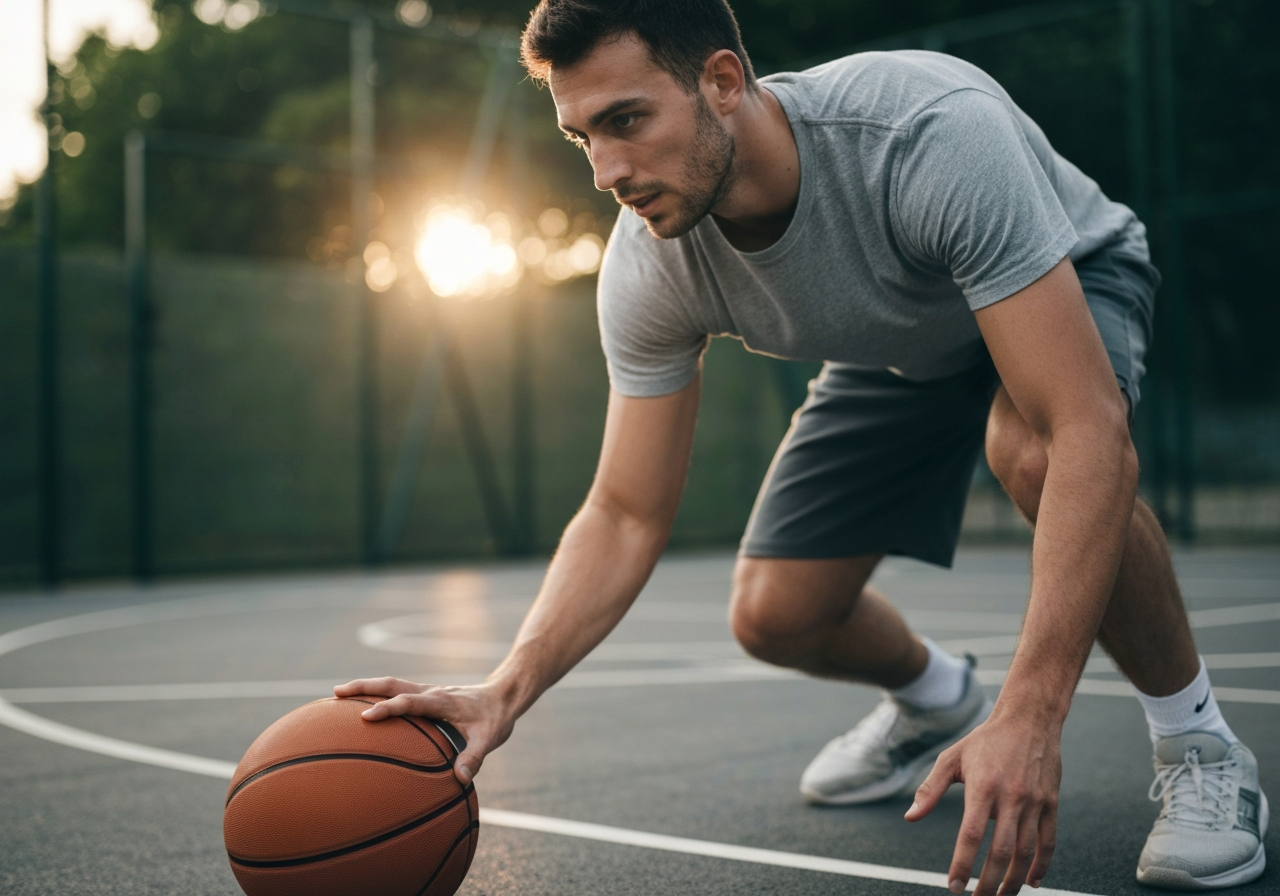
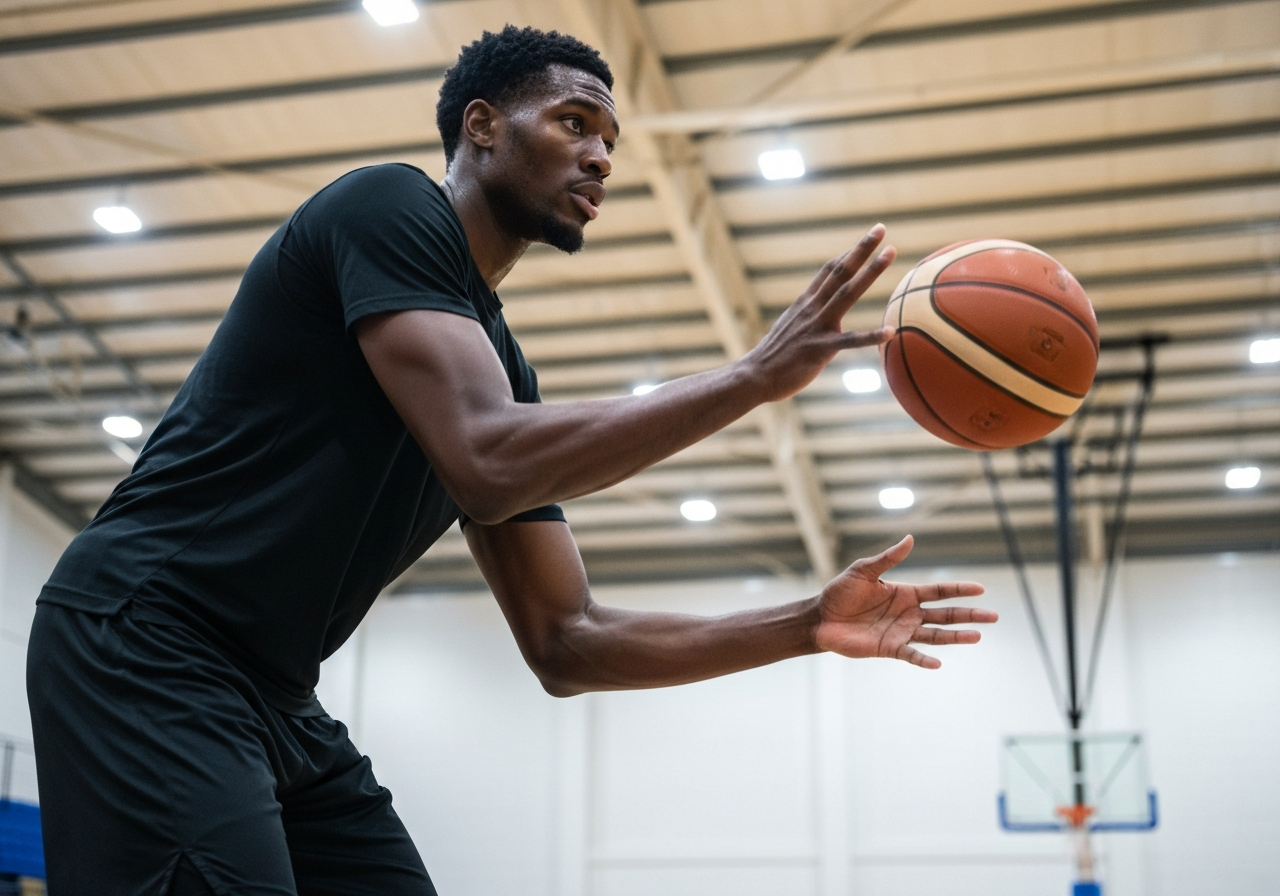
Ball handling is the foundation. If you cannot control the ball under pressure, every other skill suffers. The goal is not flashy dribbling — it is maintaining your dribble while reading the defense and making decisions.
Stationary Pound Dribbles (Beginner)
Game transfer: Protecting the ball against pressure defense
Stand in triple threat position. Pound the ball hard — waist height, not knee height — with your dominant hand. 30 seconds, then switch. The emphasis is on force, not speed. A hard dribble is harder to steal than a fast one.
Progression: Add crossovers every 5 pounds. Then add between-the-legs. Then behind-the-back. Each variation should be as hard as the straight pound.
Two-Ball Dribbling (Intermediate)
Game transfer: Ambidexterity, controlling the ball without looking
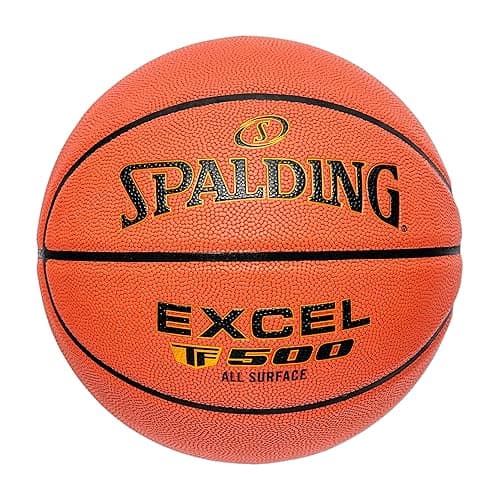
Dribble two balls simultaneously. Start with both balls hitting the floor at the same time (symmetric). Once comfortable, alternate (one up while the other is down). Then add walking, then jogging.

Why it works: Your weak hand is forced to match your strong hand's rhythm. There is no way to cheat by favoring one side. 10 minutes of two-ball work equals 30 minutes of single-ball work for weak-hand development.
Full-Court Attack Dribble (Advanced)
Game transfer: Pushing the ball in transition, beating defenders in the open court
Start at the baseline. Push the ball ahead of you at a 45-degree angle, sprint to catch it, make one hard change of direction at half court, then finish at the rim. The ball should stay out in front — if you're dribbling at your side, you're going too slow.
For detailed ball handling progressions, see our Ball Handling Drills deep dive.
Shooting Drills
Shooting is the most practiced skill in basketball and the most poorly practiced. Standing in one spot shooting threes is not practice — it is recreation. Game shots come off movement, off screens, off the dribble, under pressure, while fatigued.
Form Shooting (Beginner — But Never Outgrow It)
Game transfer: Shooting mechanics, muscle memory for release point
3 feet from the rim. One hand (shooting hand only). Focus on: elbow under the ball, flick of the wrist, ball off the index and middle finger, follow through held until the ball hits the rim. 20 makes with right hand, 20 with left.
Every great shooter starts here. Steph Curry does form shooting before every game. It is not a beginner drill — it is a calibration tool.
Catch-and-Shoot off Movement (Intermediate)
Game transfer: Shooting off screens, spot-up shooting in game flow
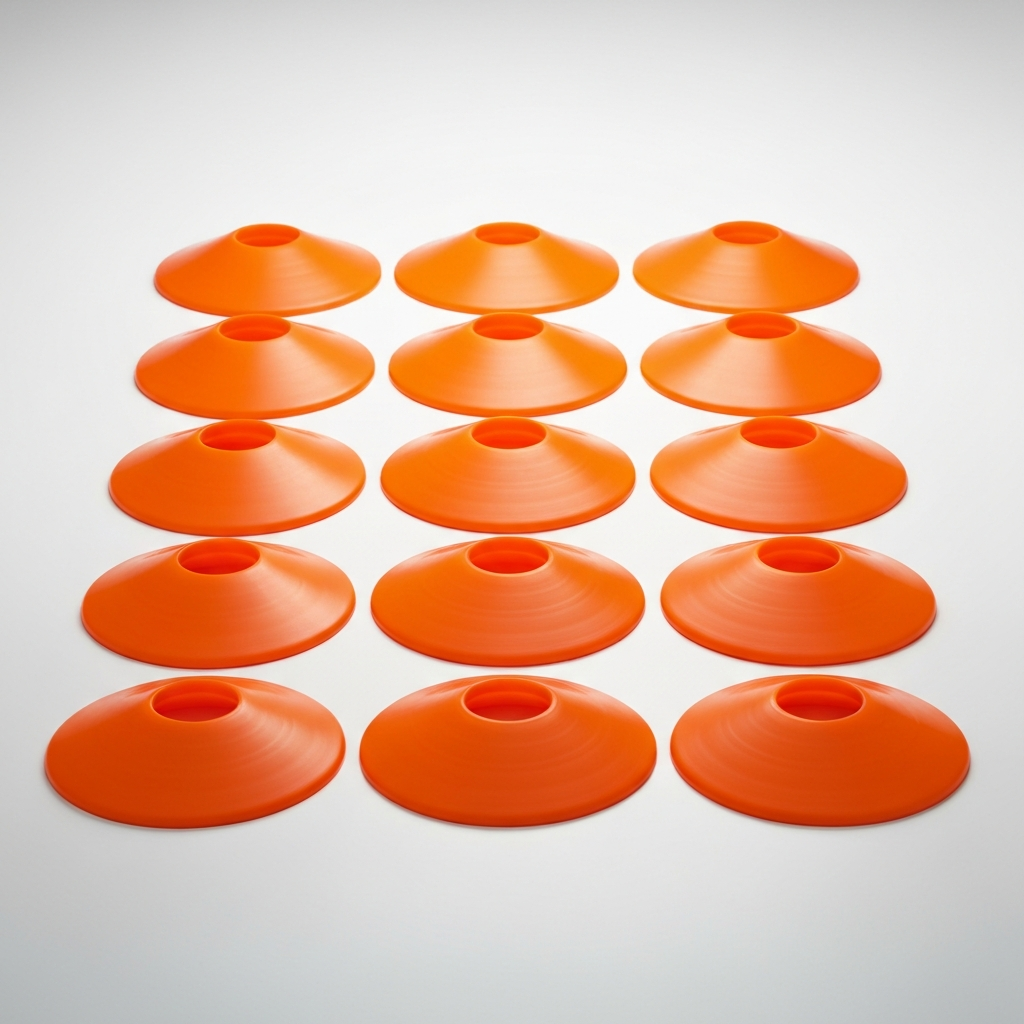
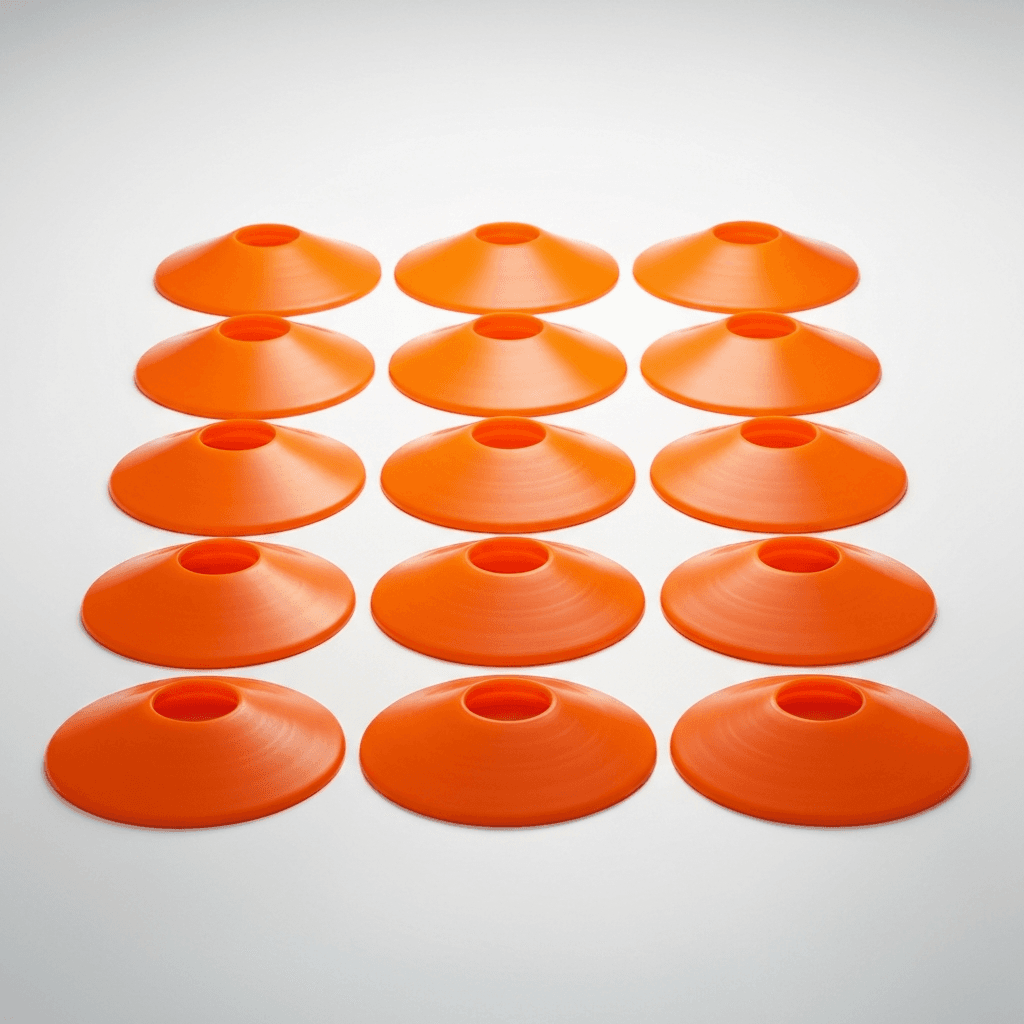
Set a cone at the three-point line. Start at the block. Sprint to the cone, plant your outside foot, square your shoulders, and catch an imaginary pass (or use a rebounder). Shoot. Rotate to 5 spots around the arc. 3 makes at each spot before rotating.
Key detail: The plant-and-square is the drill. Rushing the shot is the mistake everyone makes. In games, the best shooters are fast getting to their spot and slow releasing the shot.
Pull-Up Jumper Series (Advanced)
Game transfer: Mid-range scoring off the dribble, creating your own shot
Start at the three-point line. Two hard dribbles toward the basket. Stop. Shoot. The stop must be sudden — a jump stop or a 1-2 step into the shot. If you're fading away, you're going too fast. The goal is balance at the point of release.
For full shooting progressions, see our Shooting Drills deep dive.
Defensive Drills
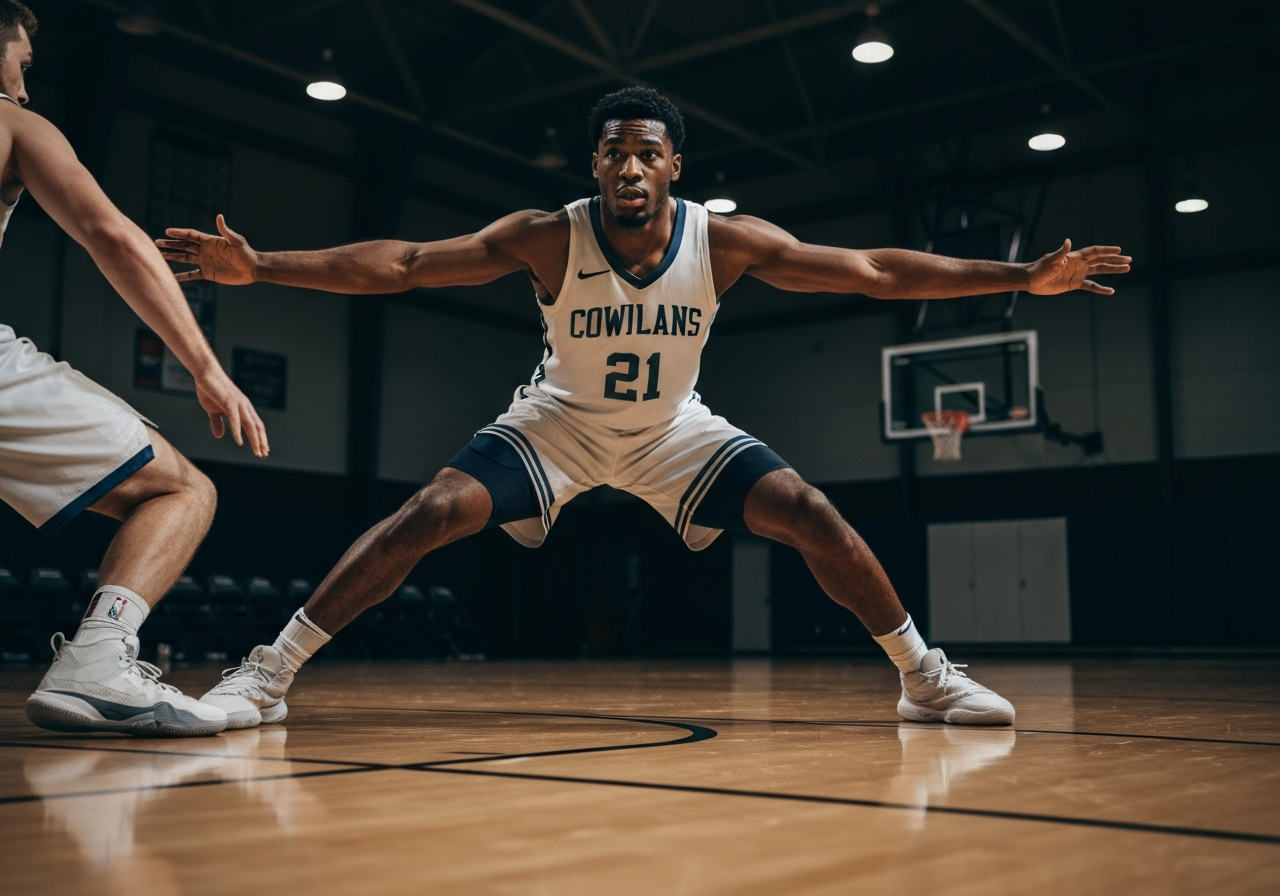
Defense is the least practiced skill because it is the least glamorous. But defense is what gets you playing time — coaches trust defensive effort before they trust offensive talent. And unlike shooting, defensive improvement shows results within weeks, not months.
Defensive Slide Circuits (Beginner)
Game transfer: Staying in front of your man, closeouts, help defense recovery
Set 4 cones in a square (10 feet apart). Defensive slide from cone to cone — stay low, push off the back foot, never cross your feet. Around the square twice, rest 30 seconds, repeat 3 times. Focus on staying low. Standing up between slides is the most common habit to break.
Closeout-and-Contest (Intermediate)
Game transfer: Closing out on shooters without fouling or flying by
Start at the free throw line. A cone at the three-point line represents the shooter. Sprint to the cone, chop your feet in the last 3 steps (short, controlled steps that allow you to change direction), contest with a hand up, then slide left or right to simulate the shooter driving.
Why the chop matters: Sprinting full speed at a shooter means you fly by when they pump fake. The chop steps are your brakes. Practice them until they are automatic.
For more defensive drills, see our Defensive Drills deep dive.
Weekly Practice Schedule
| Day | Focus | Duration | Key Drill |
|---|---|---|---|
| Monday | Ball handling + Finishing | 50 min | Two-ball dribbling → layup series |
| Tuesday | Shooting | 45 min | Form shots → catch-and-shoot → pull-ups |
| Wednesday | Defense + Conditioning | 45 min | Slide circuits → closeouts → full court sprints |
| Thursday | Ball handling + Shooting | 50 min | Full-court attack → game-speed shooting |
| Friday | Game simulation | 60 min | Pickup or 1-on-1 to apply skills under pressure |
Common Practice Mistakes
- Practicing at slow speed: If you always dribble at 50% speed, you will dribble at 50% speed in games. Practice at game speed or slightly above.
- No progression plan: Doing the same drill at the same difficulty for months means you are maintaining, not improving. Every 2 weeks, make it harder.
- Skipping weak-hand work: Your opponent will figure out which hand you prefer within 3 possessions. A weak left hand limits everything you do on the right.
- All shooting, no handles: You cannot get to your shot without handles. Prioritize ball handling until it is genuinely reliable under pressure.
Frequently Asked Questions
How long should a basketball practice session be?
Aim for 45 to 65 minutes of focused work, broken into a five-block sequence: dynamic warm-up (5 min), ball handling (10-15 min), shooting (15-20 min), game-speed combination skills (10-15 min), and conditioning (5-10 min). Longer sessions are not better — quality reps decline sharply after 60 minutes of focused practice. The reason rec-league players plateau on two-hour solo sessions is the same reason: the last 60 minutes are degraded reps reinforcing fatigued patterns. Two 45-minute sessions on different days outperform a single 90-minute grind every time.
Why does ball handling come before shooting in this practice order?
Ball handling is the foundation. If you cannot control the ball under pressure, every other skill collapses — you cannot get to your shot, cannot create for teammates, cannot survive a press. Handle work also degrades sharply with fatigue, which means the time to do it is when your muscles are fresh and coordination is sharp. Shooting comes second because the warm-up plus 10-15 minutes of ball handling has already raised your heart rate and primed your motor patterns; cold-muscle shooting builds inconsistent release patterns and bakes in bad habits. Conditioning intentionally goes last so you are not practising skills while exhausted.
What does a week of basketball practice look like?
The weekly schedule in this guide is a five-day rotation: Monday is ball handling plus finishing (50 min), Tuesday is shooting (45 min), Wednesday is defense plus conditioning (45 min), Thursday is ball handling plus shooting (50 min), and Friday is game simulation through pickup or 1-on-1 (60 min). The split rotates skills so no single muscle group is overworked, and every Friday tests whether the week's drill work transfers to live play. Two days off are built in for recovery — adaptation happens during rest, not during the session.
What are the most common mistakes that ruin a practice session?
Four mistakes show up in nearly every plateau: (1) practising at slow speed — if you always dribble at 50 percent, that is exactly how you will dribble in games; (2) running the same drill at the same difficulty for months and calling it improvement when it is actually maintenance; (3) skipping weak-hand work — opponents identify your preferred hand within three possessions and shut down everything that depends on it; and (4) all shooting and no handles — you cannot get to your shot without a reliable handle. Audit your last week of practice against this list before changing your program.
How do these drills connect to the deeper position-skill guides?
This guide is the practice architecture; the deep-dive children carry the full progressions. Use the Ball Handling Drills deep dive for the stationary, movement, and game-speed phases (weeks 1, 3, and 7 onward). Use the Shooting Drills deep dive for form-shooting calibration through pull-up jumper progressions. Use the Defensive Drills deep dive for the slide circuits, closeout drill, and 4-on-4 shell drill — including the explicit Game-transfer signal on every drill. The pattern: this hub schedules and sequences; the children specify reps, cues, and progressions. Pick your weekly skeleton here, then drill specifics from the children.
For the equipment you need to run these drills, see our Training Equipment guide. For shoes that handle the lateral movement in defensive drills, see Best Basketball Shoes 2026.
Related guides
喜欢这篇分析?
订阅获取更多类似分析,直达您的邮箱。